🚨 STEPHEN SCHNEIDER WASN’T ALONE AT THAT TABLE — AND THAT COULD CHANGE HOW HIS FINAL HOURS ARE UNDERSTOOD.
His wife, daughter, son-in-law and two grandchildren were all there when Schneider says he drank three beers over roughly two hours… but what did everyone actually see before he took the wheel? 👀
With prosecutors later citing a BAC of about 0.16%, the dinner suddenly becomes a crucial part of the timeline — and there were multiple people who could potentially confirm what happened minute by minute.
What was ordered? When was it served? How did Schneider appear before leaving? And could the restaurant records or surveillance footage answer questions that the public still has?
The timeline may have started at the dinner table — and people who were sitting there could hold the missing pieces. 👇
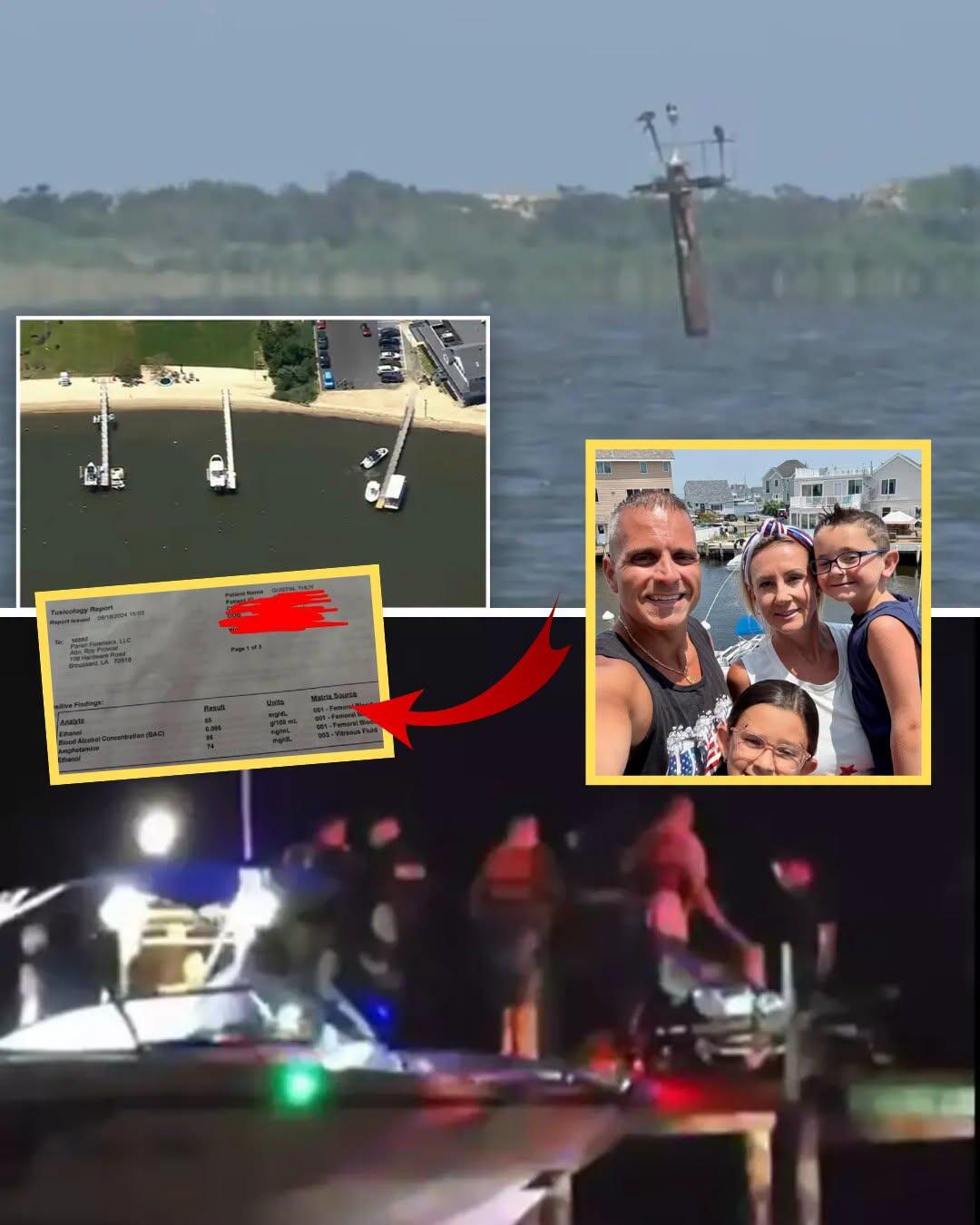
Stephen Schneider Wasn’t Alone at Dinner Before Fatal Boat Crash — What the Family Table Could Reveal About the Timeline
The hours before Stephen Schneider allegedly crashed his boat into a Barnegat Bay channel marker are becoming an increasingly important part of the case — and the timeline begins not on the water, but around a restaurant table.
On July 19, Schneider had dinner at MJ’s Restaurant Bar & Grill in Bayville with his wife, his daughter, his son-in-law and his two grandchildren, 9-year-old Mya Bella Golabek and 7-year-old Sigmund Paul Golabek.
The family meal lasted roughly two hours.
Schneider later told investigators that he consumed three beers during that period: two Guinness beers and one Miller Lite.
But prosecutors say a blood test taken after the crash showed a blood alcohol concentration of approximately 0.16%, twice New Jersey’s legal limit.
That gap between Schneider’s account of his drinking and the reported BAC has made the dinner itself an important piece of the broader timeline.
The key question is not simply how many beers Schneider says he consumed.
It is what the people around him observed.
The Dinner Was a Family Gathering
According to court documents and multiple reports, Schneider did not drink alone before taking his grandchildren onto the boat.
His wife Laurie, his daughter, his son-in-law and the two children were at the dinner.
The family had arrived by separate boats. After the meal, the children went with their grandparents rather than returning with their parents.
Schneider subsequently operated his boat with his wife and grandchildren aboard.
Around 9 p.m., the vessel struck a channel marker in the Intracoastal Waterway.
The impact threw both children into the water.
Both were wearing life jackets, according to reporting on the case, but they were found unresponsive and later pronounced dead at a local hospital.
Schneider is now facing two counts of reckless vessel homicide/death by vessel, as well as charges related to operating a vessel under the influence and reckless operation.
He has not been convicted, and the allegations remain matters for the court to determine.
Three Beers — And a 0.16 BAC
The most closely scrutinized part of the dinner account may be Schneider’s statement about alcohol.
According to court documents cited by multiple outlets, Schneider told police he had consumed three beers over approximately two hours.
That reportedly consisted of two Guinness beers and one Miller Lite.
But prosecutors later revealed that Schneider’s BAC was approximately 0.16%.
At his August court hearing, prosecutors argued that the number demonstrated a significant degree of impairment.
News 12 reported that Assistant Prosecutor Kate Burke characterized the BAC as evidence of the level of impairment involved when Schneider allegedly operated the vessel.
The defense, meanwhile, has indicated that the BAC itself may be examined.
Reporting from the August hearing said Schneider’s attorney intended to retain an independent expert to verify the reported 0.16% result. The defense has also raised questions about whether the channel marker was illuminated on the night of the crash.
Those issues are important because the case will ultimately involve more than a single number.
Investigators and attorneys will have to establish the sequence of events leading from dinner to departure to the collision.
The People at the Table Could Matter
The presence of multiple family members at the restaurant does not automatically mean they witnessed Schneider’s exact alcohol consumption.
But their presence potentially gives investigators several independent observations of the same period.
A family member could potentially remember what Schneider ordered, when he drank, how long the meal lasted and how he appeared before leaving.
Restaurant employees could potentially provide information about orders and service.
And restaurant records, if obtained by investigators, could potentially help establish when the drinks were purchased and how the table’s bill was handled.
Surveillance footage, if available and preserved, could potentially provide another layer of evidence by establishing when the family arrived and departed.
None of that means such evidence has been publicly confirmed.
At present, there is no reliable public report establishing that a restaurant surveillance video or detailed beverage bill has been released in the case.
That distinction matters.
The existence of potentially useful evidence should not be confused with confirmation that investigators have obtained or analyzed it.
Reconstructing the Evening Minute by Minute
A criminal investigation can sometimes turn an apparently ordinary dinner into a detailed timeline.
The restaurant’s records could potentially answer relatively simple questions.
When did the family arrive?
When were the beers ordered?
Were they ordered together or separately?
When was the final drink served?
When did the family pay?
When did Schneider leave the restaurant?
Those details could then be compared with witness statements and other evidence.
The same approach could be applied to Schneider’s condition.
Did family members notice anything unusual?
Did restaurant staff observe signs of impairment?
Did anyone express concern about Schneider operating a boat?
Or did he appear completely normal to those around him?
Those questions are especially significant because impairment is not always obvious to casual observers, and a witness saying someone appeared normal would not necessarily contradict a later toxicology result.
Conversely, a witness describing obvious impairment could become relevant evidence when considered alongside the BAC and other facts.
What Happened After Dinner?
The children had reportedly arrived at MJ’s Restaurant with their parents on another boat.
After dinner, they chose to return with their grandparents.
That decision explains why Schneider was operating the vessel carrying the children later that night.
The boat was a Tidewater Custom 280.
According to reporting based on court documents, Schneider told investigators he was traveling at approximately 20 mph when he saw the channel marker only at the last moment.
The vessel struck the marker around 9 p.m.
The collision sent the children into the water, triggering a frantic rescue effort involving Schneider and his wife.
The two children were ultimately transported to a hospital, where they were pronounced dead.
That sequence is now largely established through official statements and court-related reporting.
The more difficult question is what happened during the hours immediately beforehand.
The BAC Has Become a Central Issue
The reported 0.16% BAC is one of the strongest publicly reported pieces of evidence against Schneider.
It is also why his account of drinking three beers has received so much attention.
The defense has not simply accepted every aspect of the prosecution’s interpretation.
At the August hearing, defense counsel argued for Schneider’s release and indicated that an independent expert would examine the BAC result. The defense also raised the issue of the channel marker’s lighting.
A judge ultimately granted Schneider conditional release.
He was prohibited from operating a boat or motor vehicle while completing a court-ordered assessment, according to ABC7 New York.
His next court appearance is scheduled for September 15, according to reporting following the release hearing.
Online Discussion Is Focused on the Same Questions
The case has also generated significant discussion online, particularly around the three-beer statement and the reported BAC.
On social media and Reddit, commenters have questioned how Schneider could have reached a BAC of approximately 0.16% if his account of alcohol consumption was accurate.
Others have focused on the responsibility of the adults who were present before the children boarded the boat.
Those reactions reflect public interest in the case but should not be treated as evidence.
A Reddit theory, TikTok claim or social-media post cannot establish what Schneider drank, what his relatives knew or whether restaurant records exist.
Only evidence gathered during the investigation and presented through the legal process can answer those questions.
Why the Restaurant Could Still Be Important
The restaurant is significant because it represents a fixed location and a relatively defined period.
Unlike the open water, where reconstructing every movement can be difficult, a restaurant may have multiple potential sources of evidence.
There may be transaction records.
There may be staff members who remember the table.
There may be other customers.
There may have been surveillance cameras.
And, most importantly, there were family members who spent the evening with Schneider before the boat trip.
If investigators can establish an accurate timeline of the dinner, they can compare it against the toxicology evidence and Schneider’s account.
That could either reinforce parts of his statement, raise additional questions or simply provide context that is currently missing from the public record.
But until such evidence is made public, it would be premature to claim that surveillance footage or a beverage receipt has already disproved his account.
A Case Still Developing
Schneider was released from jail despite prosecutors arguing that his reported BAC demonstrated significant impairment.
The judge’s decision was influenced in part by the absence of a criminal history and by support from the children’s parents, who asked that Schneider be released. News 12 reported that the children’s father described Schneider as a loving father-in-law and grandfather in a letter to the court.
The defense has also maintained that the crash was not intentional and has questioned aspects of the physical evidence.
Meanwhile, Schneider remains charged with serious offenses connected to the deaths.
The case is now moving toward the next stage of the court process.
And as that happens, the restaurant dinner may remain one of the most closely examined portions of the timeline.
The Questions Still Hanging Over the Dinner
The public knows that Schneider ate with his family.
The public knows that he told police he drank three beers over roughly two hours.
The public knows prosecutors later cited a BAC of approximately 0.16%.
What remains less clear is exactly what happened between those points.
What did Schneider’s relatives observe?
What do restaurant records show?
Were there witnesses outside the family who saw the group leave?
And is there surveillance footage that could establish the precise departure time?
Those questions cannot be answered by online speculation.
But if investigators have access to independent records and witnesses from the restaurant, they could help reconstruct one of the most important windows in the case — the period between a family dinner and the boat trip that ended in tragedy.
For now, the restaurant table remains a potential source of answers, not a proven breakthrough.
And the next court proceedings could reveal whether the evidence from those final hours becomes a central part of the prosecution’s case, the defense’s challenge, or simply another piece of a much larger timeline.
Để lại một bình luận