Drones buzzing near Moscow. Low-flying bombers skimming the trees at over 800 km/h. And four $2.5 million cruise missiles slicing straight toward a key Russian electronics plant 😳
In a 28-minute breakdown, MilitaryHub reconstructs how two Ukrainian Su-24M bombers allegedly pushed low, climbed into exposed radar airspace, fought through a pending-weapon glitch on a second missile, and released four Storm Shadows—right as drone alerts were pulling eyes toward the Russian capital.
Wait until you see what happens when Buk and Pantsir-S1 air defenses try to lock onto a low, terrain-hugging target under electronic jamming… and why a 450 kg BROACH warhead hitting electronics components could hurt far more than a blown-out roof.
Four explosions. One massive column of smoke. How did they get through? Watch the full breakdown and see every detail 👇
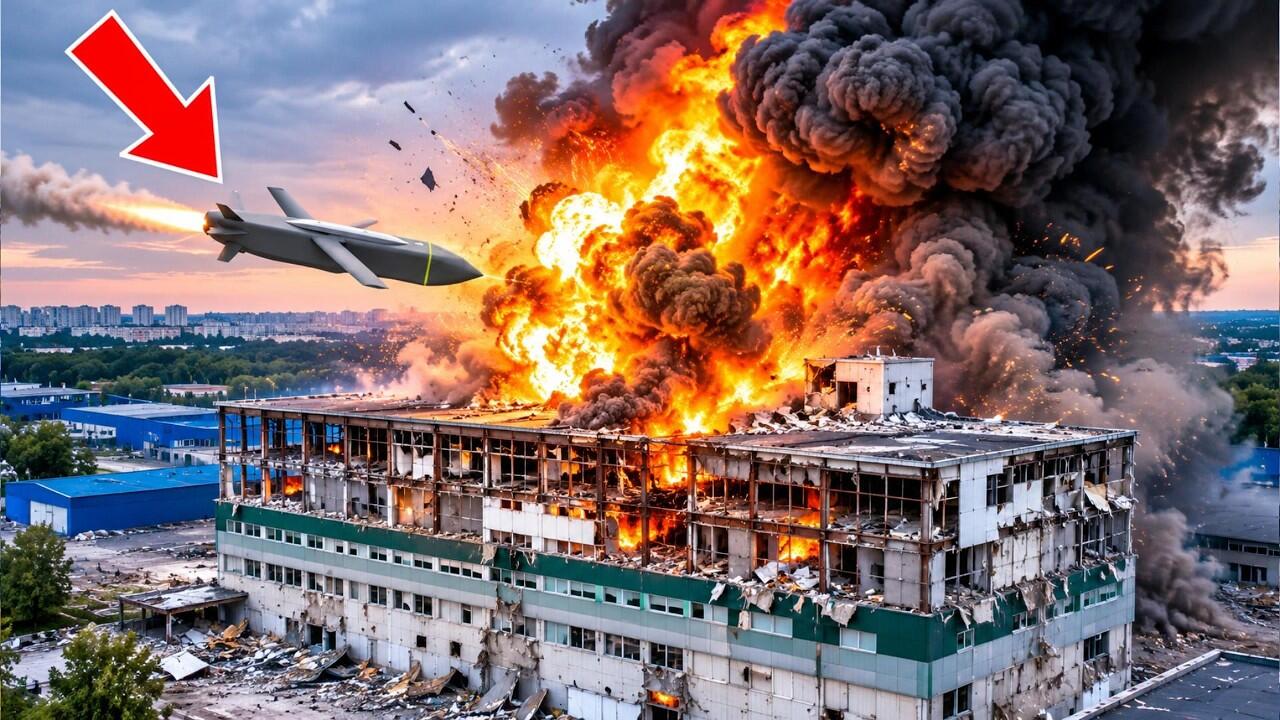
Long-range precision strikes deep inside contested or Russian-held territory have become one of the most closely watched—and fiercely debated—dimensions of the war in Ukraine. When MilitaryHub published “Ukraine Just Used The Deadliest British Missile In History On Russia,” the channel walked viewers through a detailed reconstruction of a low-altitude Su-24M mission and four Storm Shadow cruise missiles aimed at an industrial electronics facility in Oryol (“Uriel” / “Orio” / “Oral” in the narration), tying the tactical breakdown to broader discussions over air defenses, electronic warfare, and defense-industrial targets.
Across YouTube comments, Reddit defense threads, X reposts, Discord war-room channels, and short-form edits on TikTok, the video has sparked lively debate over how deep strikes are executed, how air-defense batteries respond to low-flying cruise missiles, and how much weight viewers should place on reconstructed timelines versus verified OSINT and official reports.
The Drama at a Glance: Low-Level Run, Pending Checks, and Four Impacts
According to MilitaryHub’s walkthrough, the reconstructed operation centers on two Ukrainian Su-24M bombers carrying Storm Shadow air-launched cruise missiles—weapons valued at roughly $2.5 million each, weighing around 1,300 kg, and equipped with approximately 450 kg BROACH penetrating warheads designed to strike hardened structures.
Key moments in the narrative include:
-
Low-altitude dash and radar warnings: Flying fast and low over terrain helps bombers stay below distant radar coverage and avoid getting drawn close to the front line, though skimming close to the ground leaves thin margin for terrain or obstacle errors. When radar warning receivers pick up activity, crews face split-second trade-offs between staying low and climbing into the release profile.
-
Weapon-readiness tension before release: In MilitaryHub’s account, while the first missile shows ready, a second weapon lingers on a pending indication as the bomber climbs and approaches launch parameters—adding pressure before both missiles clear and the wingman releases two more, sending four cruise missiles downrange while the aircraft turn back toward friendly territory.
-
Distraction and layered air defenses: The breakdown links the southern strike to drone activity reported hundreds of kilometers away near Moscow, suggesting that radar crews, air defenses, and aviation authorities face divided attention when multiple threats develop simultaneously. Along the flight path, the narration describes radar detections, electronic warfare jamming affecting satellite navigation, and interception attempts by Buk and Pantsir-S1 air-defense systems.
-
Four strikes on an electronics complex: Entering its terminal phase, a Storm Shadow relies on onboard navigation—inertial guidance, terrain referencing, and an imaging infrared seeker comparing the view ahead with stored reference data—to guide its BROACH warhead into designated buildings at the electronics plant, resulting in four explosions and rising smoke.
Tactical Reality Behind the Footage: Stealth Profiles, Jamming, and Warheads
Military analysts and defense enthusiasts frequently point out that cruise missiles like Storm Shadow (known in French service as SCALP) are built specifically to complicate ground-based air defenses rather than rely on sheer supersonic speed alone. Flying low along terrain contours makes small, low-observable targets harder to separate from ground clutter and radar horizons until time is short.
In MilitaryHub’s analysis, several operational factors stand out:
-
Multi-layered navigation against electronic warfare: Electronic warfare systems attempt to degrade or jam satellite navigation signals to throw precision munitions off course. Cruise missiles counter that threat by combining inertial navigation, terrain-referencing systems, and terminal imaging infrared matching so they can still reach a programmed aim point even if GPS is contested.
-
Time compression for air-defense crews: At roughly 870 to 880 km/h, a cruise missile covers nearly 15 kilometers a minute. Detecting an intermittent return, classifying it as a cruise missile rather than a slower drone or civilian track, establishing a reliable fire-control track, and launching interceptors leaves narrow reaction windows—especially when multiple missiles follow in sequence.
-
Why electronics and components matter: Strikes against industrial sites producing electronic or opto-electronic components for missiles, radar, or defense systems target high-value bottlenecks. Even if structural repairs are possible, specialized manufacturing equipment and precision components can be difficult to replace quickly.
Broader defense reporting underscores that Storm Shadow/SCALP remains a central piece of Ukraine’s long-range strike toolkit—alongside ongoing discussions around resupply, western air-defense and strike platforms, and initiatives aimed at expanding local or licensed production capacity over time.
Wider Context: Deep Strikes, Air Defenses, and Information Realities
Deep-strike operations inside Russian territory sit at the intersection of military capability, diplomatic debate, and information warfare. Supporters argue that hitting logistics nodes, fuel infrastructure, and defense-industrial plants degrades Russia’s ability to sustain high-tempo operations and forces Moscow to disperse air defenses across vast territory. Critics and cautious analysts sometimes debate whether deep strikes alone shift front-line momentum or carry escalation and supply trade-offs.
At the same time, viewers watching a 28-minute YouTube reconstruction should keep in mind how such breakdowns are built. Channels like MilitaryHub weave together known weapon specifications, public reporting on strikes and drone alerts, and dramatic, minute-by-minute narrative reconstructions to explain how a mission could unfold—which is not the same thing as an official military log or unedited cockpit recording.
How the Community Reacted: Reddit, X, Discord, and TikTok
Online reaction to the video—and to long-range cruise missile strike stories more broadly—varies sharply by platform:
-
On Reddit: Users in defense and conflict subreddits often separate confirmed facts from dramatic storytelling. Commenters scrutinize exact timestamps and locations, debate how effectively Buk or Pantsir systems perform against low-flying cruise missiles in real engagements, and ask whether strike videos show confirmed structural destruction or only smoke and distant blasts.
-
On X (formerly Twitter): Clips, missile specs, and strike maps circulate quickly among OSINT accounts, defense commentators, and partisans on both sides. Some threads highlight the technical sophistication of terrain-hugging cruise missiles and multi-axis pressure, while others push back on hyperbole—noting that no single missile is a “wonder weapon” and that air-defense performance is routinely contested in official claims.
-
In Discord servers: Smaller military and aviation channels tend to focus on technical mechanics—how terrain-hugging flight profiles work, why a pending weapon check on a pylon creates stress for an aircrew, and how electronic warfare and terminal seekers interact in contested airspace.
-
On TikTok: Short-form clips isolate the flashiest moments—jets flying low, missiles launching, air-defense alerts, and plumes of smoke—packaging complex air-campaign dynamics into fast-scrolling hooks that prompt viewers to check the comments or search for follow-up clips.
What Comes Next: What to Watch in Long-Range Strike Coverage
Looking ahead, coverage around Storm Shadow and similar long-range systems points to three key developments to watch:
-
Production, resupply, and air-frame integration: How quickly allied stockpiles, new production lines, and compatible launch platforms keep pace with operational demand will shape how frequently these weapons appear in future strikes.
-
The cat-and-mouse race in air defense and EW: As missile guidance, decoy tactics, and drone waves evolve alongside Russian radar, interceptor, and jamming networks, engagement outcomes will remain a central focus for analysts.
-
Fact-checking dramatized reconstructions: As audiences encounter more minute-by-minute video reconstructions, separating verified strike reports and satellite/OSINT evidence from dramatic narration will remain essential to reading the conflict accurately.
Để lại một bình luận