36 men. One tank out front. And before they even hit the trench, the armor goes up in flames right in front of them 😳
Most assault teams would freeze, panic, or pull back when their cover gets knocked out in the open. Instead, the order over the comms is brutal and immediate: keep moving — because stopping in that kill zone could be worse than pushing straight into the trenches.
Once inside, everything unravels in seconds: collapsed earth squeezing the attack down to a crawl, a grenade flying right past a leader on the parapet, a surrender that hints at six more defenders still lurking nearby, medics fighting to save a wounded teammate under fire, and soldiers running low on ammo just as enemy tanks and late artillery enter the picture.
Wait until you hear what happens right after the position is taken — and the surreal word one fighter uses to describe the whole 20-minute nightmare.
Watch the full 31-minute breakdown and see how it plays out 👇
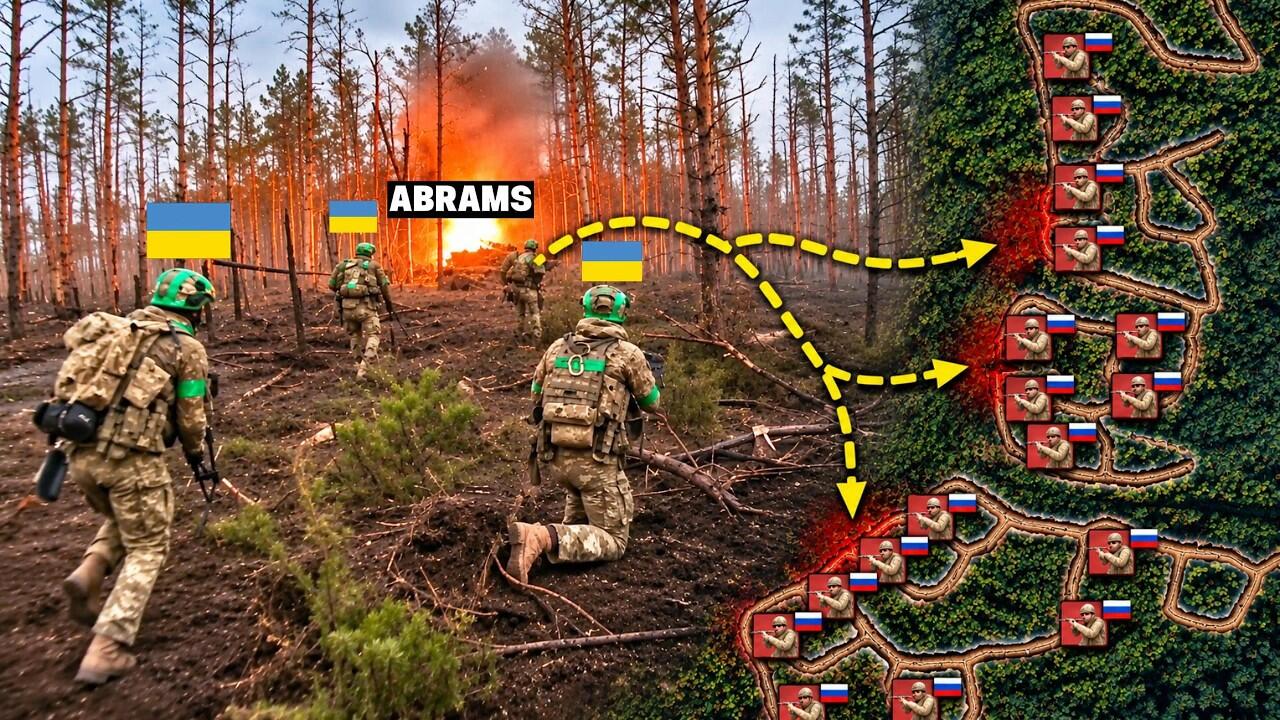
Few things draw crowds across military forums and social media feeds faster than raw, close-quarters trench combat—especially when the plan begins unraveling before the attackers even reach the wire. In a 31-minute breakdown titled “36 Ukrainian Azov Soldiers Assault Russia’s Deadliest Trench — 31 Minute RAID (Real Footage),” the channel MilitaryHub examines a roughly 20-minute assault sequence where almost nothing goes according to script: a supporting tank takes a hit and starts burning ahead of the infantry, earlier shelling partially caves in part of the trench line, casualties mount, ammunition runs thin, and defenders scramble to react as attackers push inside.
Even before viewers reach the end of the video, the clip has sparked intense discussion across YouTube comments, Reddit defense threads, X reposts, Discord war-room channels, and short-form edits on TikTok. Rather than treating the raid as a neat, textbook maneuver, commenters have focused on the messy chain reactions of modern infantry warfare—where a single hit on armor, a bottleneck in dirt, or a radio intercept can flip the momentum of a fight in seconds.
The Drama at a Glance: A Burning Tank, Bottlenecks, and High-Stakes Choices
According to MilitaryHub’s walkthrough of the footage, a 36-man assault element moves toward a Russian trench network with a tank advancing ahead to draw attention and fire after sappers have worked through the area. For a brief stretch, the approach appears to work: the armor engages positions, infantry push forward behind it, and every meter covered with cover reduces the distance that must be crossed without it.
Then the situation shifts abruptly:
-
Armor hit in the open: The tank takes a hit and catches fire ahead of the advancing force while its crew begins withdrawing. After confirming the tankers made it out, the assault force faces a stark dilemma—linger or turn back across exposed ground while defenders alert to the burning vehicle, or press forward into the trench before Russian forces can organize a heavier response.
-
Collapsed trench obstacles and close-quarters danger: Once inside the trench system, visibility shrinks to meters and every bend becomes a potential threat. Earlier shelling that helped prepare the position has also partially collapsed a section of the trench, forcing troops to squeeze through one man at a time while the platoon commander climbs onto the breastwork above to keep pressure on—only to narrowly avoid a grenade thrown toward his previous spot.
-
Surrenders, casualties, and a medic’s burden: As fighting moves deeper through corners and dugouts, a surrendering Russian soldier states there are seven in the position—implying several others may still be nearby or withdrawing. Meanwhile, wounded Ukrainian troops require immediate care and evacuation plans while the rest of the platoon keeps clearing, and a medic describes the heavy psychological weight of trying to stabilize a critically injured teammate amid active combat.
-
Ammo shortages, tank chatter, and late artillery: Deeper into the push, one group reports running critically low on ammunition just as intercepted enemy communications raise the possibility of a counter-move and even a Russian tank—prompting reliance on overhead aerial reconnaissance and drone spotters for early warning. Once the position is taken, the force transitions from attacking to defending against potential counter-flanks and incoming artillery that arrives late after the breakthrough.
Tactical Reality Behind the Footage: Momentum, Friction, and Transition
Military analysts and regular viewers of combat breakdowns frequently note that real assaults rarely resemble clean diagram arrows on a map. Instead, they are defined by friction—unexpected obstacles, shifting roles, and cascading tasks that compete for limited men and time.
Several operational dynamics stand out in MilitaryHub’s account of the raid:
-
The cost of hesitating after losing armor: When an armored vehicle is knocked out in front of dismounted infantry, the visual signature of burning armor draws attention immediately. Pushing forward before defenders can coordinate, reload, or call down targeted fire is often framed as an effort to deny the enemy time to organize.
-
Tunnel vision vs. 360-degree security: Inside a narrow trench, one soldier in the wrong spot can block movement behind him, while pushing deeper stretches the attackers’ own line and exposes flanks. Every capture or casualty adds another task—securing a prisoner, treating a wound, organizing evacuation, or re-checking a corner that might still hold a hidden defender.
-
Shifting from offense to defense under threat of artillery: Capturing a trench does not end the danger; it changes the direction of fire and leaves attackers in an unfamiliar layout that may soon draw counter-attacks or indirect fire from behind the lines. Bringing fresh troops and ammunition forward to replace depleted groups—while watching approaches and relying on aerial recon—becomes essential to holding ground long enough to complete the objective.
The commentary also highlights the human contrast inside the footage: the intense pressure on combat medics making split-second life-or-death decisions under fire, the practical value of body armor when rounds strike a plate, and the surreal aftermath in which a soldier calls the ordeal “fun” after flipping control of the position in roughly 20 minutes.
Wider Context: Close-Quarters Attrition and Information Framing
Trench assaults across eastern and southern Ukraine have become emblematic of high-intensity positional warfare, where fortification lines, minefields, drone surveillance, artillery, and small-unit infantry raids intersect. In such environments, armored vehicles often serve as shock and support elements that face heavy anti-tank and drone hazards, while infantry teams bear the brunt of clearing cramped, winding earthworks.
At the same time, combat footage released by military units or analyzed by YouTube channels arrives within an information ecosystem shaped by editing, selection, and audience expectations. Viewers watching a 31-minute breakdown see curated highlights and narration interpreting what happens on screen, rather than an unedited, multi-angle record of every moment across the entire sector.
How the Community Reacted: Reddit, X, Discord, and TikTok
Online reaction to the MilitaryHub video reflects the differing habits and priorities of each platform:
-
On Reddit: Discussions in military and combat-footage communities often focus on small-unit mechanics—such as trench movement spacing, grenade tosses, how to handle a partially collapsed trench without creating a bottleneck, and the delicate balance between evacuating wounded soldiers and maintaining assault momentum. Commenters also frequently debate unit attributions, operational context, and the limits of inferring full battle outcomes from a single camera perspective.
-
On X (formerly Twitter): Clips and stills of the burning tank, trench skirmishes, and radio intercepts spread rapidly among defense watchers and OSINT accounts. Reactions often split between praise for the speed and grit of pushing through after losing armor, and cautionary notes pointing out that tactical success in a single trench segment does not automatically mean holding it permanently against heavy artillery.
-
In Discord servers: Smaller channels tend to dig into granular questions—how squads manage ammunition depletion mid-raid, how drone overwatch helps track incoming armor or flanks, and what the medic’s reflection reveals about the emotional toll of battlefield trauma care.
-
On TikTok: Short, punchy clips extract the highest-adrenaline beats—the tank taking a hit, a close call with a grenade, a surrender callout, or the post-raid remark calling the fight “fun”—stripping away much of the broader tactical context in favor of immediate shock value.
Across all four platforms, the footage resonates because it captures a paradox familiar to anyone who studies modern war: intense chaos and vulnerability existing side by side with disciplined coordination, dark humor, and sudden shifts in control.
What Comes Next: What to Watch in Future Trench Footage
Looking ahead, breakdowns like this point to several ongoing developments in how conflict and combat tactics are observed online:
-
Greater scrutiny of tactical trade-offs: Audiences increasingly look past dramatic explosions to ask practical questions about ammo supply, casualty evacuation, flank security, and how long an assaulting force can hold a captured trench once artillery responds.
-
Deeper integration of drones and infantry: As seen in the discussion around spotting potential armor and watching approaches, coordination between ground assault teams and aerial reconnaissance remains central to surviving counter-moves.
-
Continued debate over curated combat media: As long as units and commentators publish edited GoPro breakdowns, online communities will continue weighing raw battlefield emotion against the reality that any single video shows only one slice of a much larger fight.
Để lại một bình luận