They had just been throwing grenades into dugouts minutes earlier. Then a voice came over the radio asking for the status of a trapped enemy soldier — and the response over the comms had half the internet stunned 😳
In the chaos of dense woods, shattered trenches, and a ruined village, GoPro footage from Ukraine’s Third Assault Brigade captures moments nobody scrolling past expects to see. One minute, assault troops are clearing dark shelters and shouting surrender offers into the brush. The next, a captured soldier calls them “absolute gold” — and a furious argument breaks out over what it even means to be on that side of the border.
Wait until you hear who crawled out of one dugout after smoke and fire filled the entrance… and why one prisoner claimed Russia’s Investigative Committee forced him into the fight, while others talked about being left behind like dogs.
Then comes the twist that sparked wild jokes over the radio — “the archaeologists” — right as dirt and logs were being moved by hand. Why did those troops risk everything in a hot zone instead of walking away? And what happens when a dead man’s radio starts crackling with live enemy chatter?
Watch the full breakdown and see every moment for yourself 👇
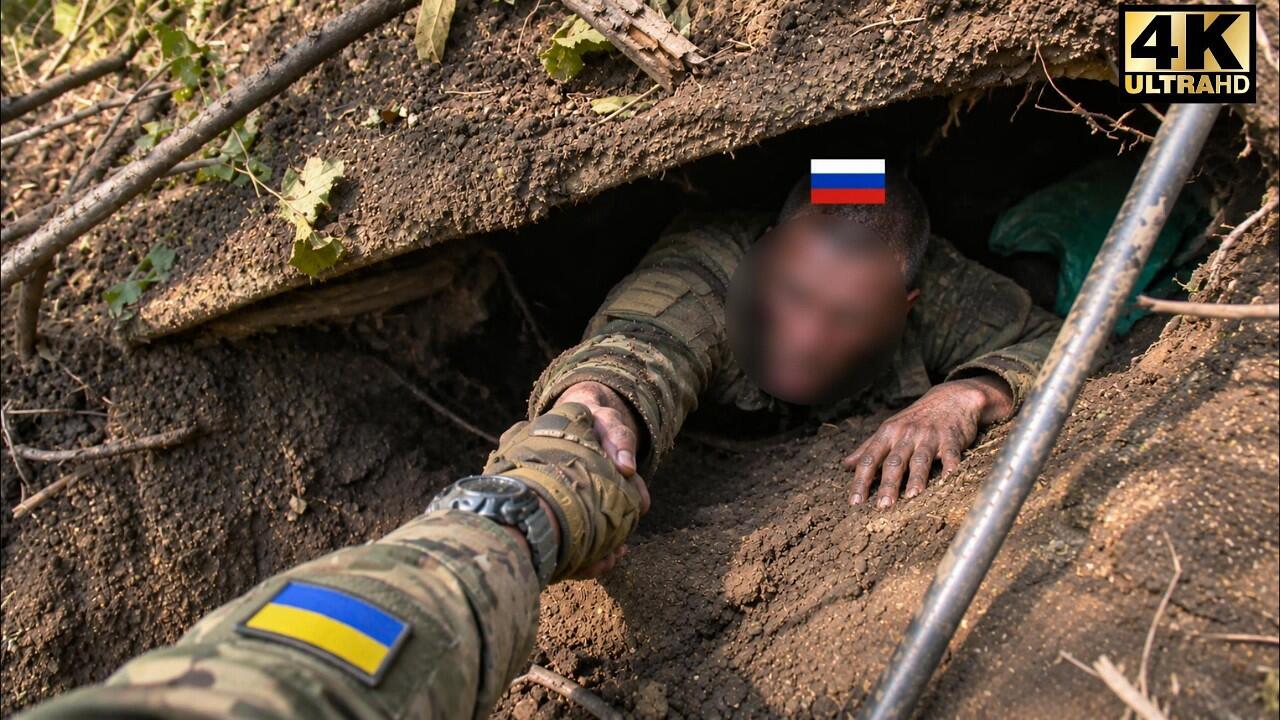
When combat footage surfaces from the front lines of Eastern Europe, viewers on social media often brace for relentless explosions, stark silence, or predictable propaganda clips. What made the MilitaryHub breakdown titled “A Wounded Russian Begged His Enemy to Save Him… Then THIS Happened”—examining GoPro footage from Ukraine’s Third Assault Brigade in a film titled The Line—stand out across online defense communities wasn’t just the close-quarters forest fighting. It was the jarring whiplash between lethal trench warfare, desperate pleas for water and medical care, unexpected foreign prisoners, and an improvised rescue under collapsed timber that drew dark humor over military radio.
Across YouTube comment sections, Reddit combat threads, X reposts, Discord war-room channels, and short-form clips circulating on TikTok, viewers have zeroed in on what The Line appears to show: a stark divide between soldiers still fighting inside tree lines and dugouts, and those who choose to surrender—alongside claims from detainees about how they ended up on the battlefield in the first place.
The Drama at a Glance: Surrender Offers, Dugout Smoke, and a Hand-Dug Rescue
According to MilitaryHub’s analysis of the footage, the film follows assault elements of Ukraine’s Third Assault Brigade through roughly 20 minutes of fighting across dense woodland, trench networks, and a devastated village marked by a Soviet-era 1945 war memorial. Rather than depicting an uninterrupted firefight without pause, the sequence highlights repeated moments where Ukrainian fighters call out surrender terms into cover before or during room- and trench-clearing pushes.
Several specific moments have driven the fiercest online discussion:
-
Tense negotiations in the brush: In one exchange, a soldier hidden behind a tree demands assurances that he will not be killed if he comes out with his hands up. After receiving a pledge of safety—and an instruction to fellow troops to hold their fire—he crawls out, asks for water and medical help, calls his captors “absolute gold,” and then sparks a heated retort when he remarks that they are all Russian, prompting a sharp reminder about crossing into Ukrainian territory.
-
Wounded detainees and claims of abandonment: Multiple captured troops appear injured or exhausted, including men with shrapnel or leg wounds who say they were left behind or pushed forward with little support. One detainee claims Russia’s Investigative Committee pressured him into joining the fight; another says he came for money, saw the reality of combat, and panicked.
-
Unexpected detainees from abroad: After smoke and fire follow an explosion and grenade toss into a dugout, three men emerging from the position turn out to be African nationals rather than Russian citizens. One states he went to Russia looking for work, echoing broader reports and intelligence warnings regarding foreign recruitment for Russian forces.
-
Digging a trapped soldier out by hand: In one of the most talked-about sequences, a Russian soldier pinned beneath logs and earth inside a collapsed dugout is dug out manually by Ukrainian troops checking his leg injuries while radio chatter jokes about “archaeologists” working on the rescue. Once freed, the dirt-covered man thanks them before being pulled clear.
Tactical Reality Behind the Footage: Forests, Drones, and ‘The Line’
Strip away the viral framing, and military observers point out that The Line illustrates classic infantry trade-offs in wooded, attritional terrain. Dense foliage can shield advancing troops from overhead observation and drone strikes, yet it simultaneously shrinks visibility to a few meters—turning every log-covered dugout, camouflage net, and bend in a trench into a potential ambush point.
In MilitaryHub’s breakdown, several standard tactical elements stand out:
-
Psychological pressure and fire discipline: Shouting surrender offers into a tree line costs little ammunition and can sow hesitation among defenders unsure whether neighbors are ready to give up. Equally critical is fire discipline: a pledge of safety collapses if an unseen rifleman on a flank fires out of panic or habit.
-
Immediate tactical questioning and signals intelligence: Questioning detainees quickly in low light matters because tactical details—unit numbers, remaining strength, or recent movement—lose value rapidly. Recovering a dead combatant’s radio can also give an advancing team a temporary window into enemy communications before the loss of the handset is realized.
-
Reconnaissance by fire, security bubbles, and anti-looting discipline: Firing into likely hiding spots after dismounting from an armored vehicle is intended to force hidden defenders to reveal themselves or keep their heads down, while moving in a diamond formation helps maintain 360-degree awareness in thick cover. At the same time, commanders must push men past captured gear and abandoned trenches so troops do not linger in areas vulnerable to counterattacks or unexploded ordnance.
From a legal and practical standpoint, caring for wounded prisoners aligns with obligations under international humanitarian law, including the Geneva Conventions, while preserving detainees alive also carries practical value in prisoner exchanges. As the commentary in MilitaryHub frames the title The Line, the boundary runs between active combat and surrender—with starkly different outcomes depending on which side of it a soldier is on.
Wider Context: Recruitment Patterns, Tactical Continuity, and Front-Line Attrition
The claims made by detainees in the footage tap into larger patterns documented across the war. Commanders at the outset of the MilitaryHub segment argue that Russian assault tactics have changed little since the brutal battles around Bakhmut—relying heavily on small groups of less-experienced troops pushed forward into heavy resistance, often suffering high casualties and leaving wounded men behind.
The presence of foreign nationals among captured personnel has also drawn recurring attention from analysts and reporters covering the conflict. Across different sectors, detained fighters from countries in Africa, Latin America, and elsewhere have given varying accounts—some pointing to financial incentives, others claiming they were lured with promises of civilian jobs, logistics roles, or pathways abroad before being sent into frontline assaults. While individual detainees’ statements in raw combat footage cannot be independently verified on their own, the recurring themes align with wider reporting and intelligence advisories.
MilitaryHub also situates the Third Assault Brigade within its broader operational history—noting the unit’s prominent role in fighting around Andriivka in 2023 and its involvement in operations near Lyman—underscoring how seasoned assault formations operate against rotating waves of less-experienced infantry.
How the Community Reacted: Reddit, X, Discord, and TikTok
Whenever dramatic GoPro clips hit mainstream feeds, online reaction rarely stays confined to military history. Across platforms, the response to The Line and its MilitaryHub breakdown has split along predictable—and occasionally heated—lines:
-
On Reddit and military-analysis subreddits: Users frequently dissect the mechanics shown on screen rather than taking every word at face value. Commenters debate fire control during close-quarters clearings, point out the risks of approaching collapsed or booby-trapped positions, and trade skepticism about how much weight to give unverified claims from prisoners who may say whatever they think their captors want to hear.
-
On X (formerly Twitter): Clips and screenshots of the dugout rescue, the argument over “Russian” versus “Ukrainian” identity, and the three African detainees circulate rapidly among OSINT watchers, war bloggers, and political commentators. Some users frame the hand-dug rescue and medical aid as evidence of restraint and discipline under extreme stress, while others argue that edited combat releases are inevitably curated to highlight favorable moments and omit uglier realities.
-
In Discord servers and group chats: Smaller, tighter-knit communities tend to focus on granular details—radio discipline, squad spacing, weapon lights in dark dugouts, and the dark humor of troops calling themselves “archaeologists” while digging a man out of packed earth. Many members note how surreal the contrast feels between lethal grenades seconds earlier and mundane human needs like water, cigarettes, or fitness banter moments later.
-
On TikTok and short-form feeds: Bite-sized clips strip away much of the 25-minute tactical context, turning specific lines—such as “we’re not monsters,” claims of being left behind, or the surprise of non-Russian prisoners emerging from a trench—into standalone hooks that drive viewers back to longer YouTube breakdowns or comment debates.
That tension between raw emotion and skepticism is a hallmark of modern conflict media. Viewers often arrive looking for a clear moral or a thrilling action sequence, only to confront messy, ambiguous fragments: soldiers who cannot verify every story told to them in the dark, high-stakes split-second choices, and footage shaped by whoever holds the camera and edits the cut.
What Comes Next: Information Warfare, Verification, and the Road Ahead
Looking forward, footage like The Line highlights three trends that are likely to define how the public experiences modern warfare:
-
First-person footage as a primary battleground: Helmet-cam and GoPro video has become central to both tactical review and public persuasion. As long as assault units record operations and release edited cuts, audiences will continue to see intimate, unvarnished-feeling slices of combat alongside deliberate narrative framing.
-
Persistent verification challenges: Claims made by captured soldiers—whether about coercion by state bodies, recruitment promises, abandonment by officers, or unit numbers—will remain difficult to verify immediately. Analysts and journalists increasingly treat such statements as clues to broader patterns rather than standalone proof.
-
Continued strain in wooded and attritional sectors: With fighting continuing across tree lines, fortified positions, and contested towns, close-quarters infantry clashes, drone surveillance, and heavy attrition remain central features of the conflict. How units balance aggressive pushes, prisoner handling, and rapid intelligence gathering will remain a key focus for military observers watching the front.
Để lại một bình luận