A TOP RUSSIAN GENERAL JUST PREDICTED RUSSIA COULD COLLAPSE BY 2027—AND NAMED THE EXACT “EXIT” PUTIN MIGHT HAVE TO TAKE! 🚨
While 18 Russian refineries have been hit in just 27 days and a livestreamer just caught a refinery strike on camera in real time, another bombshell is shaking Moscow’s inner circle. 😱
A prominent Russian general isn’t just warning about Crimea hanging by a thread or nuclear threats flying around—he’s openly talking about a peaceful handover of power after a victory parade… and moving his collapse timeline up to 2027 or 2028!
Add in staggering casualty estimates approaching 700,000 when missing soldiers and foreign recruits are factored in, and even pro-war voices are asking how long this can last.
What did the general actually propose—and why is Putin suddenly complaining on the world stage? Watch the full breakdown before the next headline drops 👇🔥
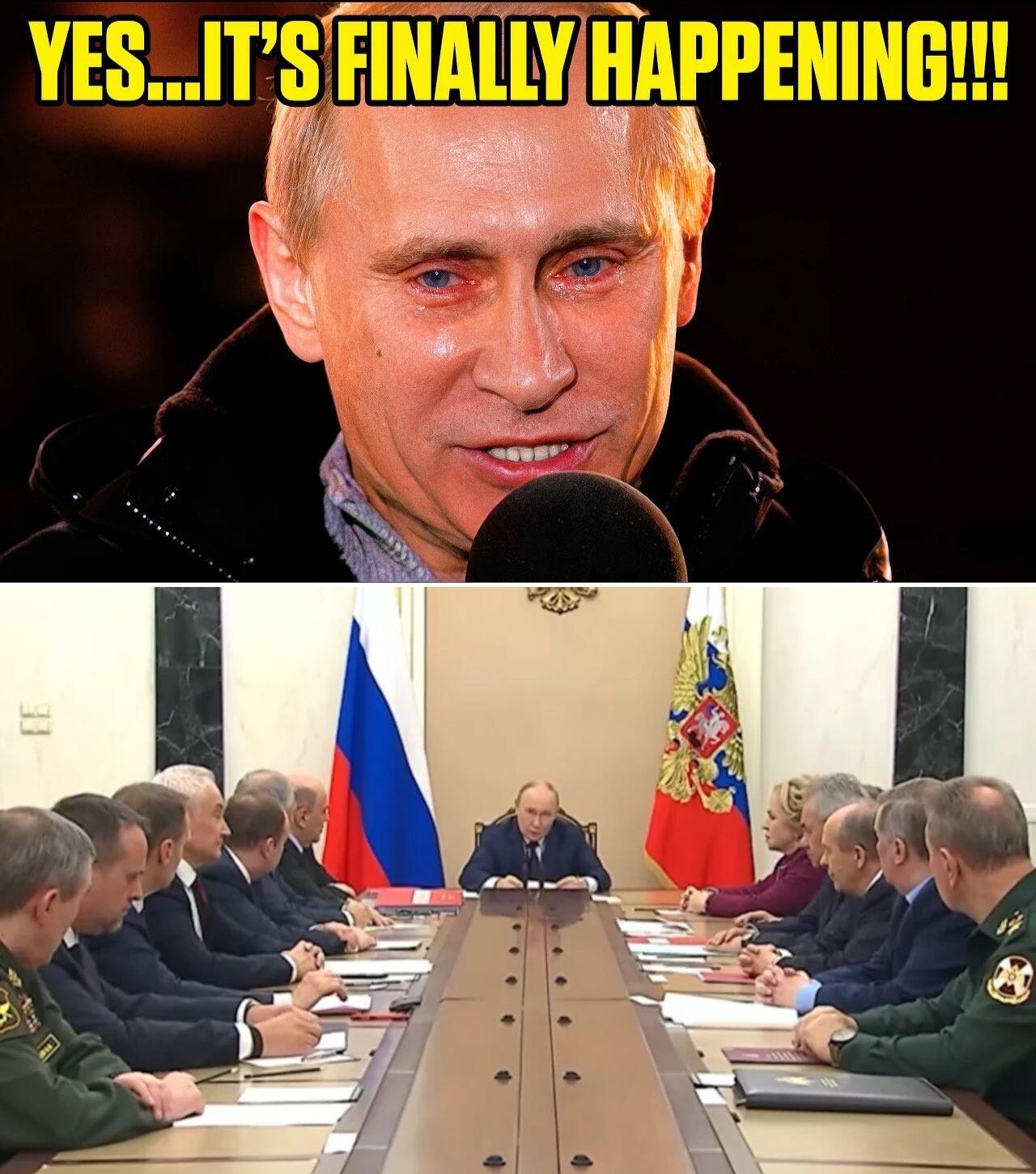
A surge of deep-strike drone attacks on Russian oil refineries, a livestreamed blast in Samara Oblast, and renewed public commentary from a retired Russian colonel general predicting potential state collapse by 2027 or 2028 have injected fresh volatility into the war’s fifth year.
According to a November 25, 2026 analysis by Business Basics, alongside reporting and data referenced from The Guardian, death-certificate datasets, Russian regional officials, and social media footage, Ukrainian long-range strikes have hit 18 different refineries over a 27-day span starting in late October. At the same time, analysts and commentators are dissecting revised casualty estimates that reach roughly 700,000 when missing personnel and non-Russian recruits are included, alongside reported warnings from Moscow to Washington regarding Crimea and nuclear escalation.
Taken together, the developments highlight a grinding war of energy and attrition—where strikes on fuel infrastructure, demographic strain, and sharp internal commentary are testing the Kremlin’s messaging even as Moscow insists its military objectives and retaliatory options remain intact.
Refineries Under Fire Across Deep Russian Territory
Long-range drone operations against Russian energy infrastructure have accelerated markedly since late October 2026. As detailed in the Business Basics breakdown, Ukrainian strikes have targeted 18 separate refineries across 27 days between October 30 and November 25—with two facilities struck twice and 16 hit once, representing a combined nominal annual refining capacity cited in the report at around 200 million tons (roughly 45 percent of Russia’s total refining capacity, though actual offline capacity varies because some plants continue operating at partial levels and exact post-strike output figures are not publicly disclosed by Moscow).
Recent targets highlighted in the report underscore the geographic reach and persistence of the campaign:
-
Perm Refinery: Located roughly 1,500 kilometers (more than 900 miles) from the Ukrainian border—and even farther from launch points behind the front lines—with a stated processing capacity of 13 million tons.
-
Novoshakhtinsk Refinery: The sole refinery in Russia’s Rostov region, reportedly struck for the 10th time, with regional leadership confirming operations were suspended as of Monday following major fires.
-
Syzran Refinery: Cited in the report as having an annual crude capacity of 8 million tons and targeted overnight, with nearby activity captured on a live broadcast from Samara Oblast.
A clip circulating from a livestream in the Syzran / Oktyabrsk area of Samara Oblast showed a streamer reacting in real time to explosions, flashing lights, and shouts about air defenses and sirens as an oil refinery was hit nearby.
The strategic logic of the campaign centers on energy and logistics. Just as strikes on power grids strain civilian life and industrial output, hitting fuel refineries and depots targets the lifeblood required to keep military vehicles, supply convoys, and economy-wide transport moving.
Putin’s Remarks, Crimea Warnings, and Nuclear Rhetoric
The scale and frequency of the refinery campaign have prompted unusually visible public pushback from Russian President Vladimir Putin. In remarks cited in the Business Basics report, Putin complained that Kyiv continued targeting oil refining capacity despite appeals and requests from the United States to refrain, warning that retaliatory measures from Russia were inevitable. Ukrainian officials have countered in effect that the strikes would end if Moscow halted its war and withdrew its forces.
Alongside the energy campaign, Business Basics highlighted reports that Moscow has warned Washington about a potential Ukrainian ground offensive to retake Crimea in spring 2027, cautioning that such an attempt could trigger a nuclear response. Observers frequently note that Moscow has repeatedly raised nuclear warnings around prior milestones—such as cross-border fighting in Kursk or deliveries of Western weapons systems—without crossing the nuclear threshold, while international consensus and even major diplomatic partners such as Beijing continue to treat Crimea’s legal status outside Russia’s own annexation claims.
Meanwhile, commentary around the Crimean Bridge—following damage to its road and rail sections—has fueled further debate over how vulnerable the peninsula’s supply lines have become. Even updates to visual depictions on the Russian Ministry of Transport’s website, which showed a single remaining arch after damage to the road span, became fodder for online commentary.
Casualty Estimates, Demographics, and Economic Roots
Debate over Russia’s human toll has also intensified following the circulation of leaked Russian death-certificate records and subsequent analysis. As explained in the Business Basics report:
-
Leaked Death-Certificate Data: An earlier dataset covering roughly 11 million Russian death certificates over recent years—when filtered for war-related deaths among officially registered Russian citizens—pointed to an estimated range of roughly 490,000 to 520,000 deaths depending on methodology.
-
Unaccounted and Missing Personnel: That official citizen figure did not include soldiers listed as missing—estimated in the report at around 200,000 to 220,000—nor did it capture forcibly mobilized individuals from occupied Ukrainian territories, foreign recruits, or North Korean troops fighting alongside Russian forces. Factoring in missing personnel and non-citizen combatants brings total estimated deaths closer to 700,000, though exact figures remain impossible to verify independently because missing soldiers cannot all be presumed dead.
-
Regional and Age Patterns: Analysis referenced from The Guardian examining age and regional origin indicated that soldiers dying in later phases of the war (2024–2026) have skewed older and disproportionately from poorer regions where financial incentives and signing bonuses carry greater weight amid limited local employment opportunities. The report noted that death rates in Russia’s poorest eight regions have been roughly four times higher than in wealthier regions.
Demographically, losing hundreds of thousands of men compounds long-standing population pressures in Russia. Even where older volunteer recruits represent a smaller share of prime childbearing cohorts than younger conscripts would, sustained losses weigh heavily on labor supply and long-term social stability.
A General’s Forecast—and Voices Calling for an Off-Ramp
Perhaps the most striking element of the Business Basics report is its focus on Colonel General Leonid Ivashov, a figure well known to defense watchers for blunt and contrarian commentary. In remarks highlighted in the video, Ivashov argued that following the destruction of the Crimean Bridge, Russia had moved from systemic crisis toward potential catastrophe—and suggested that the Russian state or empire could collapse as soon as 2027 or 2028, moving up an earlier forecast of 2029.
Asked how Russia could avert such an outcome, Ivashov advocated what he termed a peaceful change of government—suggesting in his remarks that leadership could hold a Victory Day parade marking five years of the conflict, bestow ceremonial titles, and then voluntarily step down and hand over power rather than face a violent rupture. That proposal goes far beyond standard pro-Kremlin talking points and illustrates how sharply some insiders or former officials frame the stakes of prolonging the conflict.
Similar frustration over slow territorial movement has occasionally surfaced even among pro-war commentators. For instance, remarks from Chechnya-based war blogger German Sadulaev—noted in the report ahead of talks in China—reflected weariness after years of grinding positional fighting with limited territorial shifts, while expressing hope that Beijing might help facilitate a settlement on terms favorable to Moscow.
How Online Communities Are Reacting
The convergence of deep refinery strikes, livestreamed footage, casualty breakdowns, and Ivashov’s comments has generated intense discussion across digital platforms:
-
X (formerly Twitter): Conflict trackers and OSINT accounts shared maps of struck refineries, debated the 1,500-kilometer reach to Perm, and circulated clips from the Syzran/Samara livestream alongside arguments over whether air defenses are being stretched thin across too many facilities.
-
Reddit: Users in geopolitics, economics, and military subreddits scrutinized the distinction between nominal refining capacity (such as the 200-million-ton figure) and actual temporary or permanent capacity loss, while debating the methodology behind death-certificate estimates and missing-soldier counts.
-
Telegram: Pro-Russian and pro-Ukrainian channels clashed over the severity of refinery damage, emergency responses, and the credibility of Ivashov’s remarks. Pro-war channels tended to dismiss pessimistic collapse forecasts as alarmist or disloyal, whereas critical channels pointed to fuel prices, logistics bottlenecks, and mounting losses.
-
YouTube, Discord, and TikTok: Long-form channels like Business Basics and defense Discord communities broke down drone flight distances, air-defense gaps, and demographic data from The Guardian, while short clips on TikTok and YouTube Shorts amplified dramatic livestream moments and fiery refinery visuals.
As with much of the conflict, online discussions frequently separate hard visual or documentary evidence—such as satellite imagery, regional officials’ statements on plant suspensions, and death-record analyses—from speculative forecasts about state collapse or unconfirmed battlefield rumors.
Looking Ahead
As the war moves deeper into its fifth year, the contest increasingly hinges on endurance: whether Ukrainian strikes can continue disrupting Russian refining capacity and logistics faster than Moscow can repair facilities, adapt supply routes, and reinforce air defenses; and whether Russia’s economy, manpower pool, and political system can absorb prolonged attrition without severe internal strain.
For Moscow, maintaining pressure along front lines while defending refineries far inside Russian territory and managing diplomatic expectations with partners like Washington and Beijing will remain a central test. For ordinary citizens on both sides of the conflict, the immediate reality remains defined by energy security, economic pressure, and the human cost of an unresolved war.
Để lại một bình luận