A BRAND-NEW RUSSIAN WARSHIP JUST WENT DOWN IN NORTH AFRICA—THOUSANDS OF MILES FROM UKRAINE! 🚨
Commissioned in 2023 to flex Moscow’s naval might, the corvette Mercury was supposed to be untouchable in a friendly port. Instead, satellite images and dramatic footage point to a capsized hull beside a fire-scarred pier in Benghazi—alongside reports of a second Russian vessel hit at sea! 😱
Wait until you hear how the drones got all the way into the Mediterranean… and why whispers about a possible Turkish-made aerial drone in the footage have everyone doing a double take.
Meanwhile, back near the border, word is spreading that Ukrainian troops may be pushing back inside Russia’s Kursk region again—right as another Russian-linked cargo ship reportedly burned in the Gulf of Finland.
Is Moscow’s overseas supply network unraveling right before Putin’s eyes? Watch the full breakdown to see every piece of the puzzle 👇🔥
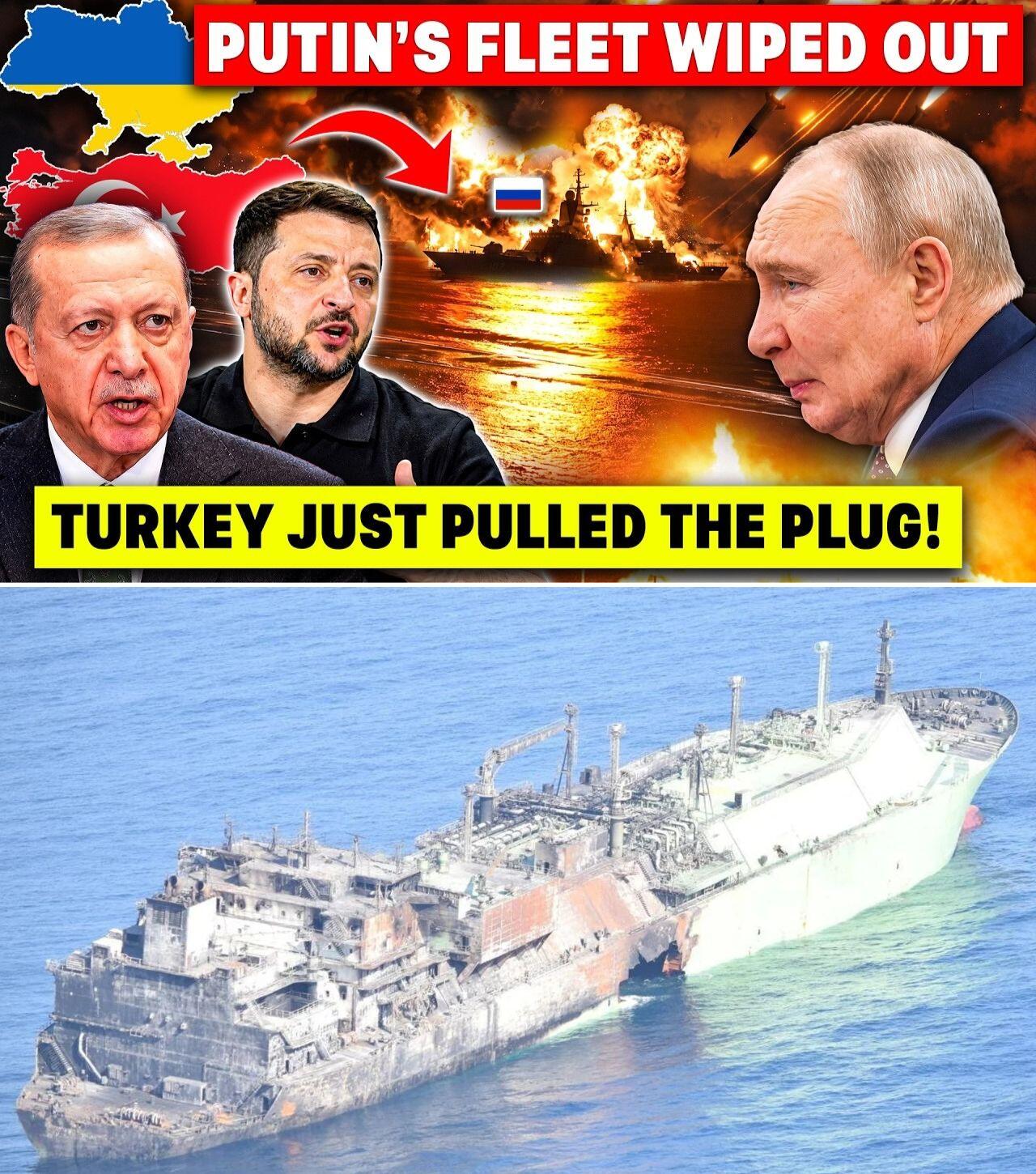
A Russian corvette commissioned in 2023 to project naval power far beyond home waters has become the center of a high-stakes maritime mystery in North Africa after night strikes hit vessels linked to Moscow near the eastern Libyan port of Benghazi.
According to a video report and analysis from Power Fault Lines, alongside dispatches and imagery cited from Reuters, Defense News, Kyiv Post, Al Jazeera, and Libyan officials, Ukraine’s Security Service (SBU) and President Volodymyr Zelenskyy claimed responsibility for an operation on the night of Sunday, November 22, 2026, using seven Ukrainian-made naval drones. The reported targets included the Steregushchiy-class corvette Mercury—said to have been sunk alongside an onboard Ka-27 helicopter—and a cargo vessel identified as the Angara (also referred to in the broadcast as the MVNAR), which was reportedly struck at sea off Libya.
The incident drew immediate attention not only because of the distance from Ukraine to the central Mediterranean, but also because of swirling questions over how the operation was conducted, conflicting casualty figures, and unconfirmed claims regarding an aerial drone—speculated in Kyiv Post reporting as potentially a Turkish-made Bayraktar—as well as separate media claims involving an Iranian ship named Alvan. Paired with reports of renewed Ukrainian activity near Russia’s Kursk border region and a fire involving a Russian-linked cargo ship in the Gulf of Finland days earlier, the episode has fueled intense debate over how far Russia’s military reach and logistics are being stretched.
What Officials and Analysts Say Happened Near Benghazi
Following the overnight strikes on November 22, the SBU released edited video and a statement on Monday, November 23, with Zelenskyy confirming Ukrainian involvement. According to the accounts presented in the Power Fault Lines report, Ukrainian forces deployed seven naval drones launched from a mother ship, allowing unmanned surface vessels to operate far outside the Black Sea.
Ukrainian officials identified the primary target in the harbor as the Mercury, a roughly 104-meter Steregushchiy-class corvette launched in 2020, commissioned in 2023, and reported by the SBU to have joined Russia’s Mediterranean squadron in 2024. The SBU stated that the ship had been escorting Russian convoys—specifically the Angara—and that Russian air, sea, and land defenses attempted to intercept the drones without stopping the strike. Zelenskyy stated that the Mercury was sunk and that a Ka-27 anti-submarine and surveillance helicopter aboard was destroyed with it.
The Angara, described by the SBU as carrying Russian military equipment and weapons—though its cargo has not been independently verified—was reportedly hit at sea off Libya rather than inside the port itself, with Libya’s navy reporting an attack on a commercial vessel north of Benghazi. Both vessels were characterized by the SBU as legitimate military targets due to their role in Russian naval capabilities and logistics.
Visual evidence cited in the reporting includes SBU-released footage showing naval drones approaching and explosions near the ships, as well as Vantor satellite imagery shared via Reuters that appeared to show a capsized corvette beside a fire-damaged pier, alongside open-source imagery reviewed by Defense News that similarly appeared to indicate the vessel had sunk.
At the same time, key details remain contested or incomplete:
-
Casualties: Accounts of human losses vary widely. Libya’s health minister reported minor injuries among sailors, Reuters—citing local medical sources—reported 10 people injured, and Al Jazeera reported one person killed. Analysts note those figures do not align and should be treated cautiously.
-
Aerial Drone Speculation: Footage appearing to show overhead views from an aerial drone prompted reporting by Kyiv Post suggesting it could have been a Turkish-made Bayraktar, though neither Ukrainian nor Libyan authorities have publicly confirmed ownership or involvement of any such aircraft, and the video title references a joint Ukraine-Turkey strike rather than an officially confirmed joint operation.
-
Separate Vessel Claim: Libyan media claimed an Iranian vessel, the Alvan, was struck by an aerial drone that same night, a claim that has not been independently verified.
Eastern Libyan authorities condemned the attack as a serious violation of Libya’s sovereignty, stating the situation was under control and an investigation was underway under a military assistance and refueling/supply arrangement with Russia. Meanwhile, the United Nations mission in Libya warned that the country must not become a battleground for foreign conflicts.
Why the Mediterranean Matters to Moscow’s Logistics
For years, Russia relied on maritime routes—most notably the network often dubbed the “Syrian Express”—to move weapons, ammunition, and equipment between home ports, partner states, and overseas military bases. Following the fall of the Assad government in Syria, Moscow’s need to adapt its Mediterranean shipping and reliance on eastern Libya gained added strategic weight.
Striking a newly commissioned corvette tied up in a friendly foreign port carries symbolic and operational consequences beyond a single hull. Overseas deployments are central to Moscow’s effort to project influence as a global military actor. If a warship moored in a partner harbor under a cooperation agreement can be hit, defense analysts point out that Russian planners must weigh whether other overseas stops face similar exposure and whether cargo runs require heavier naval escorts and surveillance.
The Benghazi strike also arrives alongside other recent pressure points across separate theaters. Days earlier, a Russian military-linked cargo ship, the Sparta II, caught fire in the Gulf of Finland under circumstances without an official claim of responsibility, though many observers suspected Ukrainian involvement. Together, maritime incidents in the Mediterranean and northern waters suggest an effort to complicate Russian shipping and force defensive adjustments well away from front-line trenches.
Border Pressure in Kursk: Novy Put and Lingering Pockets
Alongside the maritime story, Power Fault Lines examined reports of renewed Ukrainian activity inside Russia’s Kursk region—specifically around the settlement of Novy Put in the Glushkovsky district, less than a kilometer from the Ukrainian border.
According to reporting cited from November 18, a Russian military-linked channel connected to the Northern Group of Forces claimed Ukrainian troops had entered Novy Put and taken control, with the story gaining wider traction among Ukrainian and Russian military watchers around November 22. As the Power Fault Lines report emphasizes, Ukraine’s military command has not publicly commented on Novy Put, leaving the specific reported push unconfirmed.
Even so, analysts note that cross-border pockets align with earlier public statements by Ukrainian officials. In a September interview with BBC News Ukraine, Brigadier General Dmytro Voloshyn—commander of Ukraine’s 8th Air Assault Corps and a former leader of the 82nd Separate Air Assault Brigade during Ukraine’s 2024 Kursk offensive—stated that Ukrainian forces still held small, separate positions inside Kursk Oblast, pointing to the area around Novy Put, a surrounding forest, and the settlement of Ptukhy. While far smaller than the territory Ukraine held during the 2024 incursion, Voloshyn said Russian attempts to clear those pockets had proved costly before easing off.
Strategically, maintaining even modest pressure near the border—and tying into fighting around Sumy—creates friction for Moscow. Russia has sought a buffer zone along the frontier to reduce cross-border raids and pressure northern Ukrainian areas, yet guarding multiple border stretches while prosecuting offensives elsewhere forces commanders to balance troop allocations carefully. Small border actions are unlikely by themselves to trigger a major Russian retreat elsewhere, but they keep Russian units alert and complicate force planning across multiple fronts.
How Online Communities Are Reacting
News of a warship strike off Libya, unconfirmed border movements in Kursk, and a cargo ship fire in the Gulf of Finland has sparked lively discussion across social media and defense-monitoring communities:
-
X (formerly Twitter): OSINT accounts and conflict trackers circulated clips of the SBU release and side-by-side satellite views of the Benghazi waterfront, debating how naval drones could reach Libya, whether a mother ship launched them nearby, and what role aerial surveillance or strike drones may have played.
-
Reddit: Subreddits dedicated to geopolitics, military history, and open-source intelligence analyzed the Mercury’s commissioning timeline, weighed satellite imagery and Defense News assessments against mixed casualty reports, and debated the practical impact of disrupting overseas logistics versus ground attrition in Ukraine.
-
Telegram: Russian and Ukrainian military channels traded claims and counter-claims over both the Benghazi harbor incident and reports around Novy Put. Pro-Russian channels highlighted Libyan sovereignty statements and questioned narratives of strategic collapse, while pro-Ukrainian channels framed the strike as proof of expanding reach.
-
Discord, YouTube, and TikTok: Defense-oriented Discord servers dissected naval drone range, mother-ship logistics, and anti-submarine helicopter losses, while YouTube commentators and short-form clips on TikTok amplified dramatic visuals and sparked spirited arguments over unverified details such as the Alvan claim and aerial drone speculation.
Across platforms, observers frequently caution against jumping to conclusions before independent verification settles conflicting casualty counts and unconfirmed reports.
What Comes Next
Looking ahead, the Benghazi incident and concurrent border reports underscore how wide the geographic footprint of the conflict has become. If Ukraine can indeed project unmanned naval capabilities into the Mediterranean—and sustain pressure along maritime corridors and border zones—Moscow faces a tougher balancing act between protecting homeland borders, safeguarding overseas logistics, and sustaining operations inside Ukraine.
For Russia, responding to long-range maritime threats is likely to involve tighter port security where permitted by host nations, additional escort vessels or patrols along key shipping lanes, and continued efforts to police border districts like Glushkovsky. For Libya and regional actors, the immediate concern centers on sovereignty, maritime safety, and keeping foreign military rivalries from spilling further into local waters and ports.
Whether the reported loss of the Mercury proves to be a one-off long-distance strike or the start of more frequent disruptions far from the Black Sea remains to be seen—but it has already ensured that Russian naval planners cannot treat distant ports as automatically immune from surprise.
Để lại một bình luận