KIM JONG UN JUST HANDED DONALD TRUMP’S LETTER BACK—UNOPENED?! 🚨
Wait until you hear how the White House actually tried to get it into his hands on a Manhattan sidewalk… and what happened next at the UN in front of an American official! 😱
While reports swirl about backchannel outreach, a no-summit standoff during the Asia trip, and a massive jump in North Korea’s nuclear arsenal since the old summit days, Pyongyang’s moves this week are sending shockwaves straight through Washington, Seoul, and Tokyo.
Why did Kim reportedly reject the pitch—and what did Trump’s team put on the table just to get a sit-down? Watch the full breakdown before the next twist drops 👇🔥
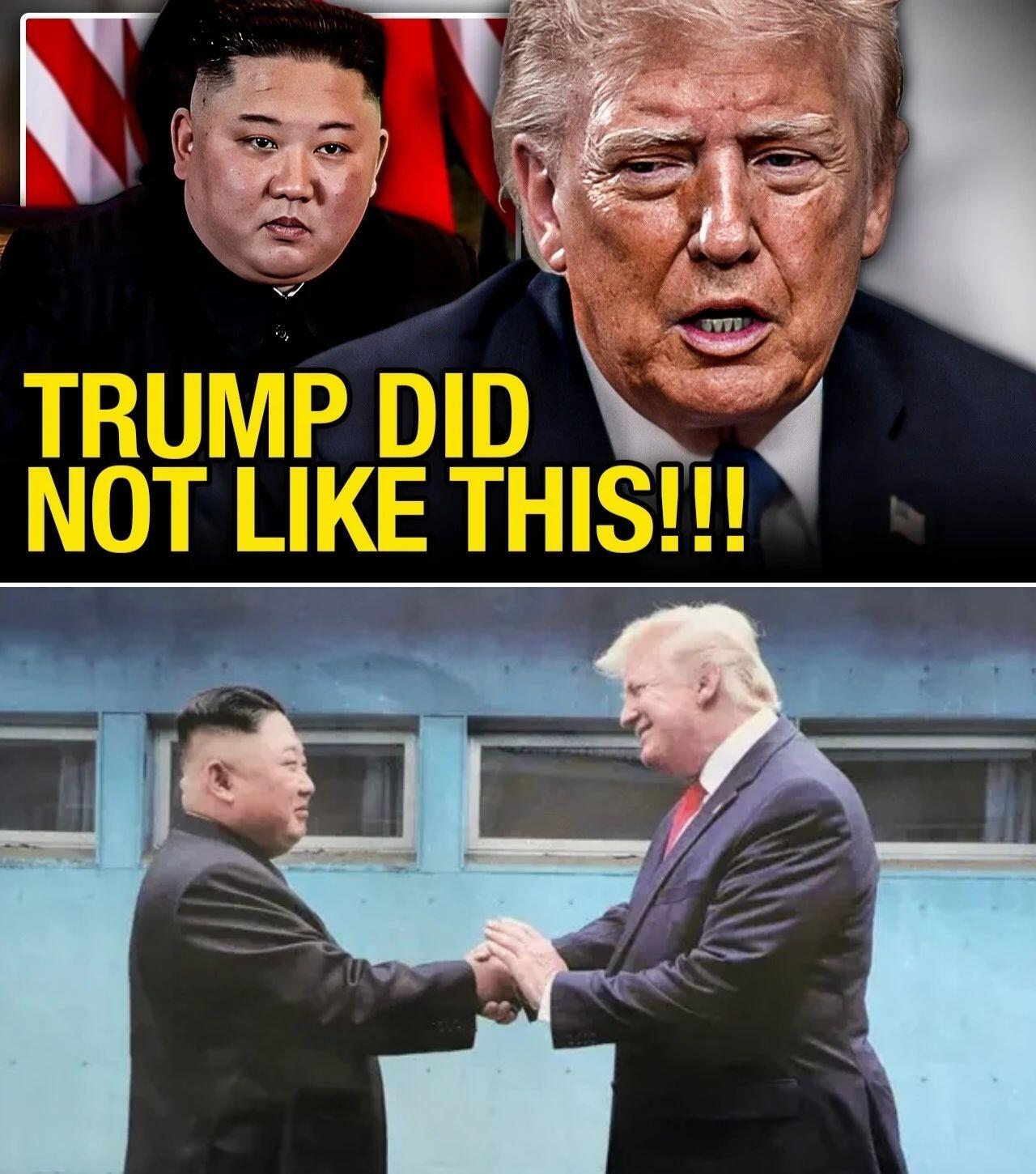
A sharp clash of diplomatic signals between Washington and Pyongyang has put renewed scrutiny on U.S.-North Korea relations, fueled by commentary in The Ring of Fire and reporting from The Wall Street Journal, the Associated Press, NK Pro, and other outlets.
In a November 24, 2026 segment, The Ring of Fire host Josh Gay examined Wall Street Journal reporting on alleged efforts to reach North Korean leader Kim Jong Un—including claims that a letter from U.S. President Donald Trump was returned unopened at a United Nations meeting after being handed to a North Korean diplomat outside the North Korean mission to the U.N. in Manhattan. The discussion comes amid broader late-November developments, including reports that Trump did not hold a proposed meeting with Kim during his November 17–19, 2026 trip to the Philippines and China, satellite imagery analysis pointing to possible North Korean missile engine testing around that window, and fresh North Korean statements vowing to expand nuclear weapons while expelling a Swiss diplomat in Pyongyang.
Together, the reports highlight a stark contrast between past high-profile summits and a much frostier reality in which Pyongyang’s growing nuclear and missile capabilities, deeper ties with Moscow and Beijing, and hardened preconditions complicate any quick diplomatic breakthrough.
What The Ring of Fire and Recent Reports Say Happened
In the Ring of Fire broadcast, host Josh Gay focused on Wall Street Journal reporting detailing frustration over getting through to Kim Jong Un. According to the segment, phone calls to established backchannel lines went unanswered, prompting a more unusual hand-delivery attempt: officials or intermediaries waiting outside North Korea’s United Nations office in New York until a North Korean diplomat stepped out and handing over an envelope addressed to Kim. Rather than opening a dialogue, Gay recounted, the diplomat later returned the envelope still sealed at a U.N. meeting in front of an American official.
The segment also pointed to earlier reports from the summer of 2025 suggesting Pyongyang had previously rebuffed correspondence from Trump, as well as White House remarks indicating the president remained receptive to communication. In addition, Gay cited Wall Street Journal reporting that during Trump’s November 2026 Asia travel, his team had weighed steps aimed at securing a meeting—such as potentially moving toward formally declaring the Korean War over, opening diplomatic offices in each other’s capitals, or issuing a statement that did not immediately demand that Kim give up his nuclear weapons—yet no meeting materialized.
Other news outlets have reported closely related developments during the same November window:
-
Asia Trip Without a Kim Meeting: Associated Press and NK Pro reporting noted that Trump visited the Philippines and China from November 17 to November 19, 2026—including a trilateral gathering in Shenzhen with Chinese President Xi Jinping and Russian President Vladimir Putin—without securing a meeting with Kim. In an interview with the New York Post cited by the Associated Press, Trump pushed back on the idea that Kim had simply ignored him, saying there were many leaders at the gathering and a meeting would happen when the time was right, while administration officials told the Wall Street Journal that nobody had been trying to set up a meeting and that Washington’s position on nuclear weapons had not changed.
-
Sohae Engine Test Imagery: NK Pro reported on November 25, 2026, that commercial satellite imagery from Maxar, Planet Labs, and Sentinel-2 showed ground discoloration and vegetation die-off consistent with high heat and exhaust plumes at the Sohae horizontal static test stand around the time of Trump’s China trip—a site used in prior tests of solid-fuel motors for intercontinental and intermediate-range ballistic missiles.
-
Nuclear Rhetoric and Swiss Expulsion: Associated Press reporting from November 25–26, 2026, noted that Kim Jong Un vowed to expand North Korea’s nuclear weapons arsenal, calling the country’s nuclear status an irreversible reality while accusing the United States of escalating regional threats. Separately, Pyongyang demanded the closure of Switzerland’s new diplomatic office in Pyongyang and ordered its top diplomat to leave within 48 hours after Swiss sanctions targeted a youth camp linked to cooperation with Russia.
While individual claims—such as the exact mechanics of the reported U.N. envelope handoff or the precise timing of any engine test—carry varying levels of confirmation, the overall picture points to deep friction rather than thawing ties.
How the Strategic Balance Has Shifted Since the Summit Era
A central theme of The Ring of Fire segment is how much the underlying strategic equation has changed since Trump and Kim held three high-profile summits during Trump’s first term. Back then, Washington and Pyongyang engaged in intense personal diplomacy and letter exchanges, even as denuclearization talks stalled over sanctions relief and verification.
As Gay noted in the broadcast, outside estimates of North Korea’s nuclear arsenal have climbed substantially over the years—from roughly 20 to 30 warheads in earlier estimates to around 60 today, alongside long-range missiles capable of reaching the United States. At the same time, South Korean officials have warned of ongoing uranium enrichment activity, reinforcing assessments that Pyongyang views its nuclear deterrent as non-negotiable.
Equally important is North Korea’s shifting external alignment. Over recent years, Kim Jong Un has deepened military and economic ties with Russia—including sending troops and munitions in connection with the war in Ukraine in exchange for aid, economic relief, and potential technical cooperation—while maintaining crucial economic and diplomatic links with China. From an analytical standpoint, stronger backing from Moscow and Beijing gives Pyongyang greater leverage and fewer incentives to make unilateral concessions to Washington.
For U.S. allies in Asia, particularly South Korea and Japan, the standoff carries direct security stakes. Whenever talks stall or military exercises and deterrence measures are debated, regional capitals closely watch whether Washington’s posture reinforces extended deterrence or creates uncertainty about alliance coordination.
Why Diplomatic Channels Look So Fragile
The reported return of an unopened envelope in New York underscores a practical reality of U.S.-North Korea diplomacy: the two countries do not maintain standard embassies in each other’s capitals, and direct communication often depends on fragile backchannels, third parties, or encounters around multilateral forums like the United Nations.
When political trust is low and preconditions are sharply opposed—Pyongyang demanding recognition as a nuclear-weapon state and sanctions relief, while Washington maintains long-standing non-proliferation goals—even basic message delivery can become a symbolic test of resolve. Returning a sealed letter or refusing to engage signals that the sender’s terms or timing are unacceptable without requiring a formal policy speech.
At the same time, conflicting public accounts—such as leaks and reporting about behind-the-scenes outreach versus official statements downplaying meeting plans or emphasizing unchanged nuclear policy—are common in high-stakes diplomacy, where negotiators often test waters quietly while protecting domestic and allied messaging.
How Online Communities Are Reacting
News of the reported diplomatic snub, satellite imagery from Sohae, and Kim’s nuclear rhetoric has generated active discussion across social media and geopolitical forums:
-
X (formerly Twitter): Foreign policy commentators, OSINT accounts, and journalists debated the Wall Street Journal and NK Pro reports, sharing satellite comparisons of the Sohae test stand and arguing over whether Kim’s stance reflects confidence from his Russian and Chinese ties or a calculated bid to extract higher concessions later.
-
Reddit: Subreddits focused on international relations, East Asian affairs, and defense analysis dissected the gap between past summit headlines and current realities, debating whether formal recognition of North Korea’s nuclear status could ever be on the table and how U.S. allies in Seoul and Tokyo view potential concessions.
-
YouTube and TikTok: Political commentary channels like The Ring of Fire drew sharp reactions from viewers—some mocking the dramatic story of a returned letter and unreturned phone calls, others pushing back on partisan framing and arguing that hard-nosed realism is required when dealing with a nuclear-armed adversary.
-
Discord and Specialized Forums: Defense and intelligence hobbyists examined satellite imagery timelines, solid-fuel ICBM testing indicators, and North Korea’s diplomatic posture following the expulsion of the Swiss envoy.
Across online spaces, observers remain divided over interpretation, though many note that hard indicators—such as missile test infrastructure, official KCNA statements, and diplomatic expulsions—carry more weight than rumor alone.
What Comes Next
Looking ahead, prospects for a breakthrough between Washington and Pyongyang appear constrained by wide gaps on core security demands. If North Korea continues expanding its nuclear and missile capabilities while leaning on partnerships with Russia and China, deterring provocations and preventing further proliferation will remain top priorities for the United States, South Korea, and Japan.
For the Trump administration, the challenge will be balancing openness to dialogue with credible deterrence and close coordination with regional allies—without signaling acceptance of an expanded North Korean nuclear arsenal. Whether future outreach happens quietly behind closed doors or remains frozen amid escalating rhetoric, the Korean Peninsula’s security environment looks likely to stay tense and unpredictable.
Để lại một bình luận