EUROPE’S ARMS SHAKE-UP AND ASIA’S TREASURY PULLBACK ARE COLLIDING AT ONCE—IS WASHINGTON LOSING ITS LEVERAGE?! 🚨
Fresh U.S. tariff proposals on major trading partners—including the EU, China, and Japan—just hit the wire, right as Tokyo and Brussels move closer on trade and defense procurement debates heat up! 😱
Meanwhile, Treasury data shows China’s U.S. debt holdings sliding to their lowest level since 2008 while Asian buyers dramatically scale back new Treasury purchases…
Hold on—does “banning U.S. weapons” mean a total cutoff or a fierce “Buy European” clash over defense contracts? And what happens to U.S. borrowing costs if major foreign holders pull back?
Watch the full breakdown before the next market and policy shockwave hits 👇🔥
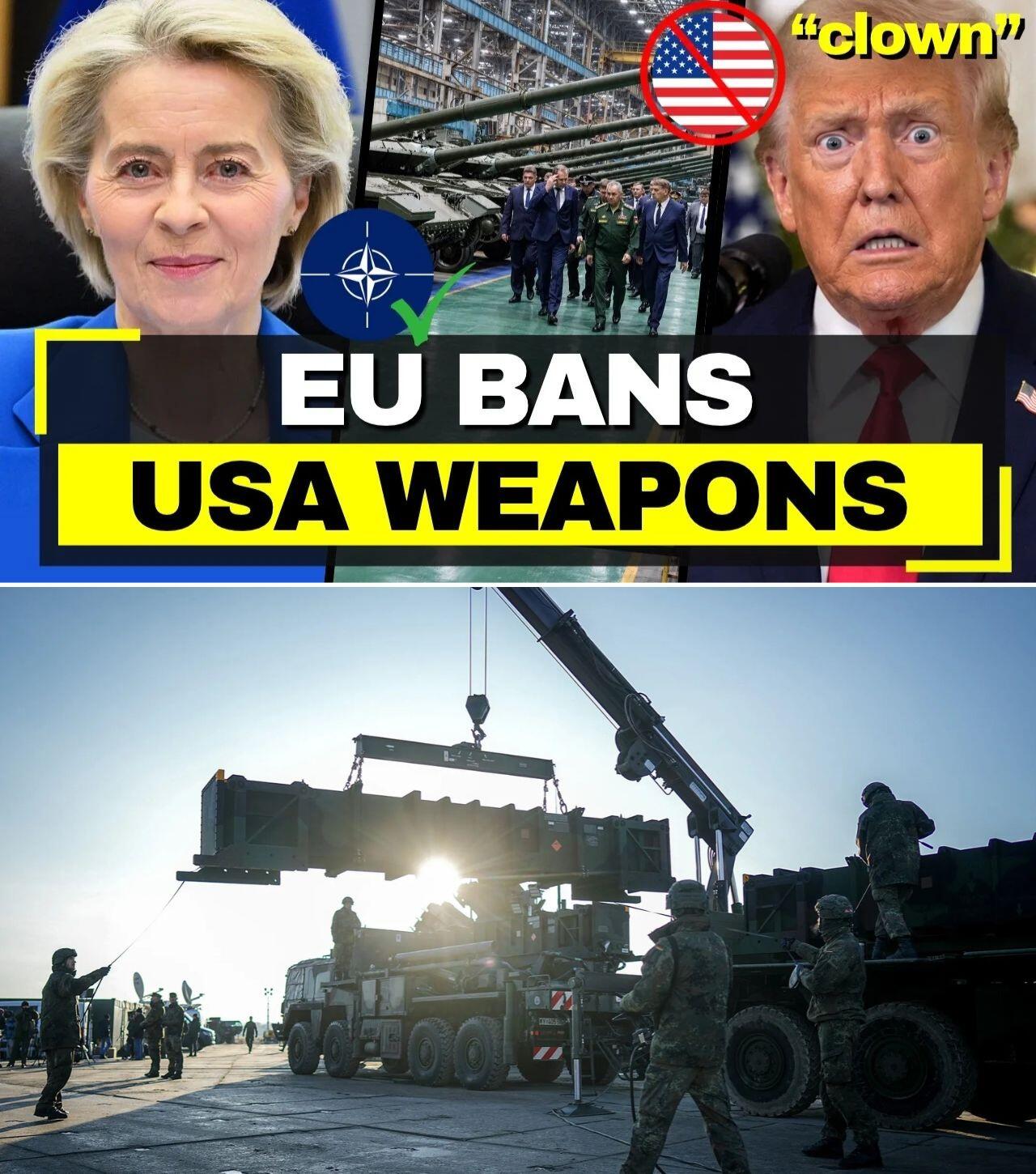
A collision of tariff announcements, shifting defense-procurement debates in Europe, and changing foreign demand for U.S. government debt has put global economic and security alliances under intense scrutiny in late November 2026.
The tensions are underscored by a viral video commentary titled Europe BANS USA Weapons – Trump BEGS, Japan and China DUMP America’s Debt (@HouseofEl, November 24, 2026), alongside reporting from The Guardian, AFP, The Japan Times, POLITICO Pro, and U.S. Treasury International Capital (TIC) data. While sensational headlines often frame policy disputes as sudden total bans or dramatic collapses, market and diplomatic records point to a more complex reality: Washington has proposed new tariffs across 14 trading partners—including the European Union, China, and Japan—European lawmakers and defense planners continue to debate “Buy European” procurement rules amid U.S. pushback, and foreign holdings of U.S. Treasuries reflect notable shifts in Asian buying patterns rather than an overnight meltdown of the U.S. bond market.
Taken together, these developments highlight how trade protectionism, defense self-reliance, and sovereign debt dynamics are intersecting at a pivotal moment for the global economy.
Tariffs, Trade Pacts, and transatlantic Friction
Late-November trade headlines brought renewed pressure to major economic relationships. According to reporting from AFP and The Guardian on November 25, 2026, the administration of U.S. President Donald Trump unveiled proposed tariffs affecting 14 trading partners—among them China, the European Union, and Japan—framed by officials around addressing structural excess industrial capacity and restoring tariff levels sought earlier in the administration’s term.
Even before the latest tariff proposals landed, major partners were already hedging against trade uncertainty. In reporting noted around November 24, 2026, Japan and the European Union moved forward on a broad free trade agreement intended in part to counter protectionist pressures and diversify trade links.
On the defense side, debates over European procurement rules have been a recurring fault line. Rather than a blanket, formal legal ban enacted overnight across all European states, discussions around “Buy European” defense initiatives and EU procurement reforms have centered on how much European defense spending should stay inside the bloc versus going to U.S. contractors. Reporting from POLITICO Pro earlier in 2026 highlighted how U.S. officials have lobbied against measures that could shut American defense firms out of European contracts, even as Washington has long pressed European allies to shoulder more of their own conventional defense burden. At the same time, in an interview with Fox News cited by Ukrainska Pravda on November 19, 2026, Trump emphasized that U.S. arms sales to European partners generate full-price revenue for the United States—a reminder that defense exports remain a key commercial and strategic pillar in transatlantic relations.
What Treasury Data Actually Shows About Japan, China, and U.S. Debt
Claims that major foreign creditors are “dumping” U.S. debt routinely capture attention online, making it important to distinguish headline phrasing from official Treasury figures. According to U.S. Treasury International Capital (TIC) data for September 2026 released in mid-November 2026—and summarized in financial reporting—total foreign holdings of U.S. Treasuries stood at roughly $9.24 trillion, while the broader U.S. Treasury market remains vast and liquid.
Within that overall picture, two distinct trends stand out:
-
China’s Holdings: Reported Chinese holdings of U.S. Treasuries fell to approximately $563.9 billion in the September 2026 TIC data—the lowest reported level since 2008—down from $590.7 billion in August and down roughly $135.3 billion (about 19.4 percent) year-over-year from September 2025. Analysts caution that changes in reported portfolio valuations can reflect maturing bonds, valuation shifts, and reserve diversification alongside sales, and do not equate to a single fire-sale event.
-
Asian Purchasing Pace: Reporting by The Japan Times (citing Bloomberg analysis in late October 2026) noted that U.S.-aligned economies—especially in Asia—had sharply scaled back net new purchases of U.S. Treasuries compared with prior periods. Japan remained the largest foreign holder at roughly $1.063 trillion in the September data, with the United Kingdom next at around $985.8 billion, even as overall foreign buying momentum cooled.
Fixed-income strategists quoted in financial coverage have pointed out that the core question for U.S. debt markets is not whether the U.S. Treasury can fund itself, but at what yield and volatility—and how sensitive future buyers are to price when traditional official buyers become more selective.
Why These Stories Converge in Online Narratives
Viral commentary thrives when multiple high-stakes stories—tariffs, defense contracts, currency and bond flows, and geopolitical rivalries—are woven into a single dramatic arc. In geopolitical and financial media ecosystems, terms like “ban,” “begs,” and “dump” serve as shorthand for friction, negotiation leverage, and portfolio shifts.
In practice, policy and financial moves rarely unfold in a straight line. A government can propose tariffs on an ally while negotiating industrial or security terms; European nations can expand domestic defense production while still relying on U.S. systems, intelligence, and deterrence; and foreign central banks or investors can trim Treasury exposure gradually while continuing to hold large dollar reserves and U.S. assets.
How Online Communities Are Reacting
The intersection of tariff news, defense procurement talk, and Treasury bond figures has sparked vigorous discussion across digital platforms:
-
X (formerly Twitter): Macro traders, foreign-policy commentators, and viral video accounts traded posts linking the November tariff proposals to TIC Treasury tables and “Buy European” defense debates, with some users warning of a shift away from U.S. financial dominance and others pointing out that dollar liquidity and U.S. capital markets still lack an immediate rival.
-
Reddit: Subreddits focused on economics, investing, and geopolitics examined the September 2026 TIC numbers—highlighting China’s lowest level since 2008 alongside Japan’s $1.063 trillion stake—and debated the difference between net buying slowdowns, valuation changes, and outright bond dumping.
-
YouTube and TikTok: Channels like
@HouseofEland short-form creators packaged tariff alerts, defense-industry rivalries, and bond-market headlines into high-energy narratives, drawing enthusiastic engagement from viewers frustrated by trade friction alongside pushback from commenters who called the headlines exaggerated. -
Discord and Market Forums: Retail and institutional discussion groups focused on bond yields, tariff exposure across 14 trading partners, and how EU-Japan trade alignment or European defense spending might affect industrial and defense stocks.
Across these spaces, observers often clash over tone and framing even when looking at the same underlying data points.
What Comes Next
Looking ahead, the interplay between Washington’s tariff posture, European defense-industrial policy, and foreign demand for U.S. Treasuries will remain a central test for global markets and diplomacy.
If proposed tariffs move forward across major partners in the EU, Asia, and elsewhere, supply chains, export sectors, and bilateral negotiations are likely to face added friction—and trading partners may continue deepening alternative trade agreements with one another. At the same time, European defense modernization and U.S. arms exports will continue to be negotiated amid competing priorities of alliance burden-sharing and domestic industrial protection.
On the financial front, market participants will watch upcoming Treasury TIC releases, interest-rate dynamics, and central-bank reserve behavior to see whether slower foreign Treasury accumulation remains a gradual structural shift or sharpens into broader market volatility.
Để lại một bình luận