COUNTRIES ARE WALKING AWAY FROM RUSSIAN WEAPONS—AND THE REAL REASON ISN’T WHAT MOST PEOPLE THINK! 🚨
For decades, Russian tanks, jets, and air defenses were a top pick across the globe. Now, buyers are quietly ditching old playbooks—and defense analysts say a mix of battlefield reality, supply bottlenecks, and sanctions headaches is rewriting the global arms map! 😱
Wait until you see what happens when domestic war production eats up factory lines, spare parts get tangled in payment and sanction traps, and rivals step in to fill the gap…
Are traditional buyers making a permanent pivot—or is there still a catch in the export numbers that surprises even seasoned watchers?
Watch the full breakdown before the next defense shift hits 👇🔥
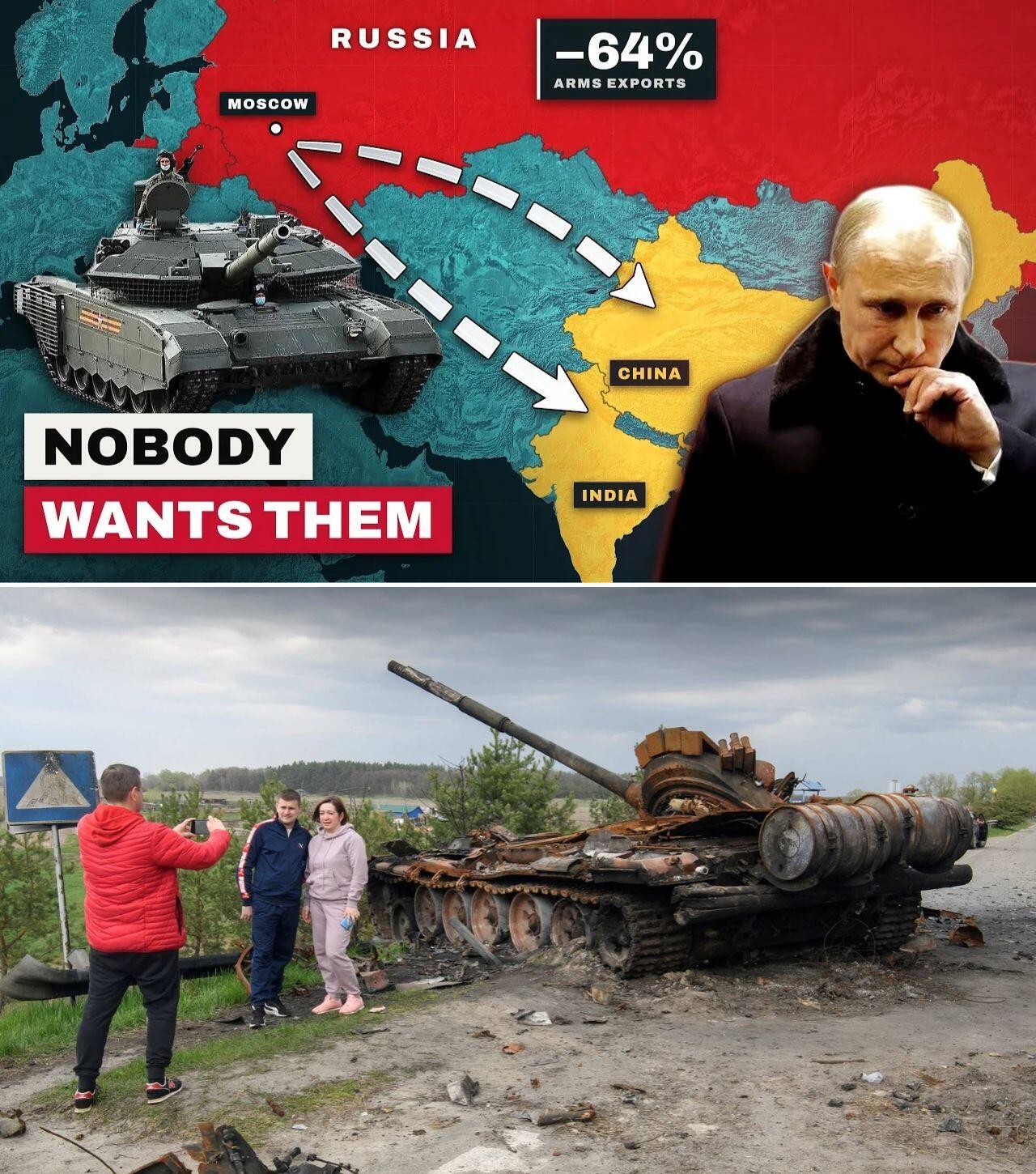
For generations, Russian defense hardware—from fighter jets and air-defense batteries to armored vehicles and helicopters—anchored the arsenals of dozens of countries across Asia, the Middle East, Africa, and Eastern Europe. Today, however, that market position faces intense scrutiny as defense analysts, trade trackers, and online communities debate why traditional buyers are reducing or diversifying away from Russian weapons even as Moscow points to continued contract backlogs and deliveries.
Fuelled by commentary around The Real Reason Countries Are Dumping Russian Weapons and recent reporting from institutions and outlets including the Stockholm International Peace Research Institute (SIPRI), the Center for European Policy Analysis (CEPA), Russia in Global Affairs, The Moscow Times, InformNapalm, and Defence Security Asia, the conversation centers on a tension between two realities: steep multi-year declines in arms export volume and customer counts documented by independent trackers versus ongoing deliveries and order books highlighted by Russian officials and defense observers.
Understanding why countries are pulling back requires looking past slogans to the practical mechanics of modern warfare—combat performance, factory priorities, spare-parts reliability, sanctions and payment friction, and competition from rival suppliers.
Combat Performance and Shifting Battlefield Demands
Modern conflicts, particularly the war in Ukraine and regional air-defense engagements, have put military hardware under unforgiving real-world scrutiny. Defense analysts note that potential buyers closely watch how platforms perform against drones, electronic warfare, anti-armor munitions, and layered air defenses rather than relying solely on brochure specifications.
When legacy designs or systems face heavy losses, interception challenges, or rapid obsolescence against unmanned systems, foreign militaries take notice. Even when a system has combat merits in specific roles, customers weigh whether the threat environment they face looks more like pre-2022 conventional warfare or a drone- and sensor-saturated battlefield that demands different capabilities, upgrades, or counter-drone integration.
At the same time, defense modernization is shifting toward networked sensors, precision munitions, unmanned systems, and interoperable command-and-control frameworks. Countries looking to upgrade entire force structures often find that buying piecemeal hardware without broader ecosystem compatibility creates integration headaches down the road.
Domestic War Demand vs. Export Delivery Reliability
One of the most direct pressures on Russia’s export model is the sheer scale of domestic military demand. Fighting a high-intensity war requires vast quantities of ammunition, armored vehicles, air-defense interceptors, electronic warfare gear, and repair capacity—all competing for the same industrial plants, raw materials, and skilled labor.
Analyses from CEPA (November 2026) and InformNapalm (November 2026) highlight how Russia’s defense industry has leaned heavily on repairing and refurbishing Soviet-era stockpiles alongside new manufacturing, while confronting input bottlenecks in specialty steels, machine tools, microelectronics, and investment financing. While some new-generation platforms or select export items—such as certain aircraft or air-defense systems noted in reporting by Russia in Global Affairs and Defence Security Asia—continue to move under existing contracts or specialized arrangements, buyers naturally ask a hard question: if a supplier’s factories are stretched at home, how predictable are delivery schedules, spare parts, and long-term maintenance?
In defense procurement, buying a weapon is only step one; keeping it flying, firing, and maintained over a 20- to 30-year service life is where trust is won or lost. Delays in spare parts or depot servicing can turn an initially affordable platform into an operational liability.
Sanctions, Payment Hurdles, and Geopolitical Risk
Beyond hardware and factory capacity, international sanctions, export controls, and financial restrictions have complicated defense trade with Russia. Purchasing major weapons systems is rarely a simple retail transaction; it involves banking channels, insurance, shipping, component sourcing, and long-term technical support.
As Russia in Global Affairs noted in October 2026, state exporter Rosoboronexport has shifted heavily away from U.S. dollar settlements toward alternative currencies and offset arrangements to navigate financial constraints. For many governments—especially those trading closely with Western economies or seeking to avoid secondary sanctions and diplomatic friction—transacting in sanctioned defense chains carries political and financial risk that outweighs price advantages.
Consequently, several former or traditional customers have diversified their procurement portfolios, turning to domestic defense industries, Western manufacturers, South Korea, Turkey, or other exporters that offer clearer supply chains and fewer diplomatic complications.
Reading the Numbers: Decline vs. Resilience
Public debate over Russian arms exports often swings between claiming total collapse and arguing that exports remain robust. Data shows why both claims need context:
-
Multi-Year Contraction and Fewer Buyers: SIPRI data cited in The Moscow Times and defense analyses showed a sharp drop in Russian arms export volume over a five-year window compared with earlier periods, alongside a shrinking list of active recipient countries as many traditional buyers scaled back or diversified.
-
Ongoing Deliveries and Backlogs: Conversely, reporting by Russia in Global Affairs and Defence Security Asia in late 2025 and 2026 pointed to Russian official statements citing roughly $15 billion in 2025 export deliveries, substantial backlog figures, and continuing transfers to select partners—such as aircraft or air-defense deliveries involving Algeria, Belarus, Myanmar, or India—often tied to long-standing relationships or barter/alternative payment structures.
For analysts, the takeaway is nuanced: Russia has not vanished overnight from the global arms trade, especially among partners with deep historical ties or limited alternative suppliers, yet its market share and breadth of customers have eroded markedly compared with its peak years.
How Online Communities Are Reacting
The question of why nations are moving away from Russian weapons—and what it means for global security—has generated lively debate across digital platforms:
-
X (formerly Twitter): Defense analysts, OSINT accounts, and geopolitical commentators share SIPRI charts, debate air-defense and armor performance in modern conflicts, and argue over whether reported export figures reflect real deliveries or legacy contracts being worked through slowly.
-
Reddit: Subreddits focused on military aviation, defense economics, and geopolitics dissect lifecycle maintenance costs, spare-parts bottlenecks, and how alternative suppliers like South Korea, France, or domestic producers are capturing market share.
-
YouTube and TikTok: Video essays and short-form clips frame the shift as a dramatic fall from grace for a classic superpower export, drawing strong engagement from viewers interested in military hardware while prompting pushback from commenters who point out that certain Russian systems still find buyers in specific niches.
-
Discord and Defense Forums: Enthusiasts and researchers compare technical specifications, refurbishment vs. new-build ratios from reports like CEPA, and regional procurement news across Asia, the Middle East, and Africa.
Across these communities, informed participants tend to separate headline claims of “dumping” from concrete procurement decisions—such as canceled options, diversified orders, or lingering reliance on legacy fleets that cannot be replaced overnight.
What Comes Next
Looking ahead, the global arms market is entering a period of structural realignment. Countries are re-evaluating what kinds of weapons matter most in an era of mass drones, electronic warfare, and long-range precision strikes, while weighing supply-chain resilience alongside cost and political alignment.
For Moscow, rebuilding broader export momentum will depend on easing industrial and financial constraints, delivering reliably on existing commitments, and proving its systems remain competitive in modern combat environments. For buyer nations, the trend points toward greater diversification—meaning many militaries will operate mixed fleets for years to come as they balance legacy equipment against newer technologies and more dependable supply lines.
Để lại một bình luận