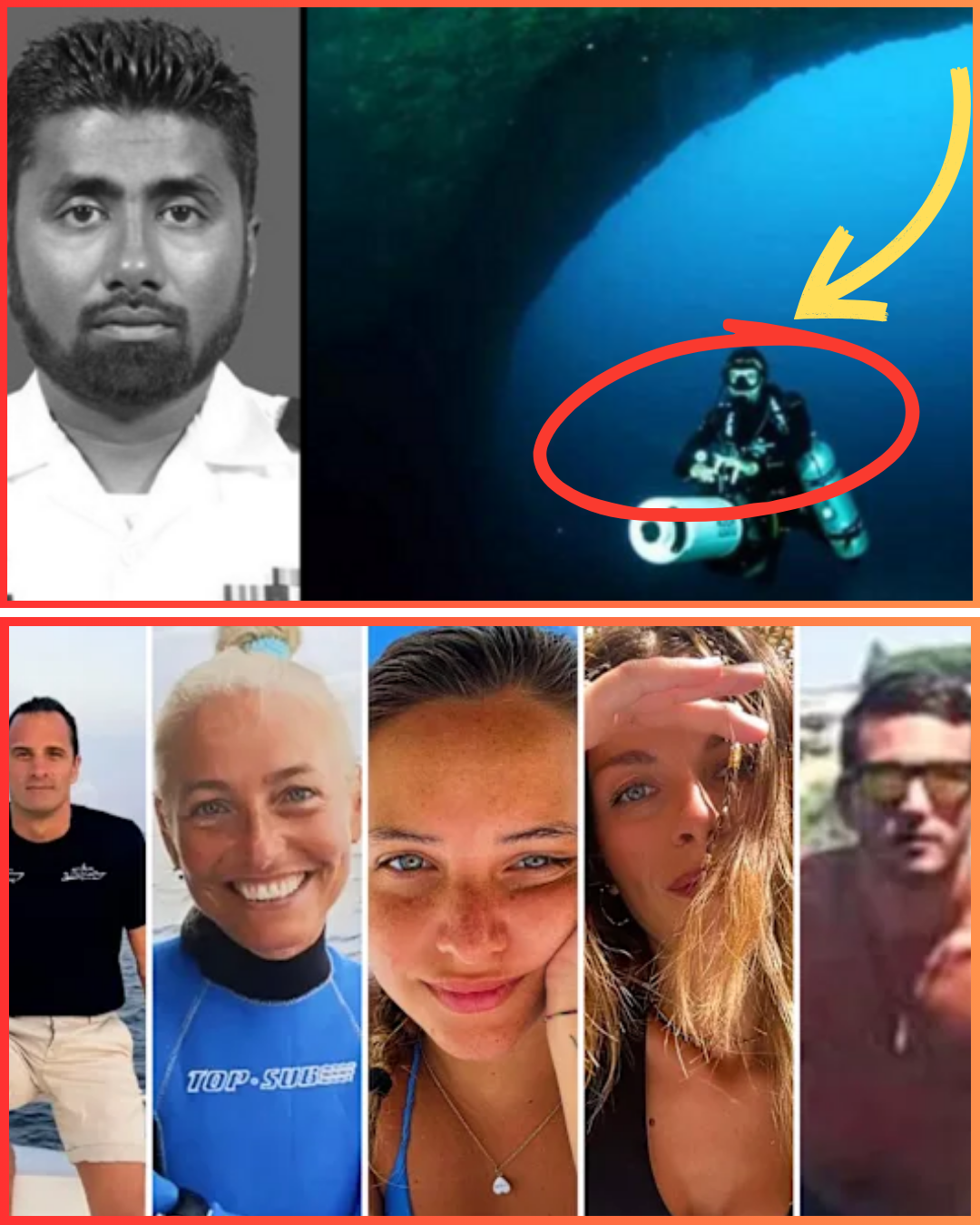
The Maldives diving tragedy that claimed the lives of five experienced Italian divers, including prominent marine biologist Monica Montefalcone and her daughter Giorgia Sommacal, has escalated into a broader catastrophe. On May 16, 2026, Staff Sgt. Mohamed Mahdhee (also spelled Mahudhee), a member of the Maldivian National Defence Force (MNDF), died during a high-risk recovery operation inside the same underwater cave system in Vaavu Atoll. His death, attributed to decompression sickness, has raised the toll to six and intensified scrutiny over safety protocols, depth limits, and the perilous nature of the rescue efforts.
Initial reports described the Italian group’s dive on May 14 as a planned exploration of a cave system near Alimathaa island, with the entrance around 50-55 meters (164-180 feet) and chambers potentially extending deeper. The team—Montefalcone (51/52), her daughter Giorgia (around 22), research fellow Muriel Oddenino, recent graduate and diving instructor Federico Gualtieri, and operations manager/dive instructor Gianluca Benedetti—failed to resurface after entering the water from the liveaboard vessel Duke of York. One body, believed to be Benedetti’s, was recovered with reports of equipment concerns such as an empty tank; the others remain presumed trapped deeper inside the complex, silty passages.
Search and recovery operations, already hampered by rough seas and a yellow weather warning, resumed on Saturday with a team of eight Maldivian military divers. According to government spokesman Mohamed Hussain Shareef, the divers entered the cave system. Upon surfacing, they realized Mahdhee had not returned with the group. A rapid re-entry located him unconscious. He was rushed to hospital in critical condition but succumbed to decompression sickness — the formation of gas bubbles in blood and tissues, often linked to rapid ascent or inadequate decompression stops.
Mahdhee had been part of briefings with President Dr. Mohamed Muizzu and represented the elite Coast Guard response. His death has prompted national mourning in the Maldives. The MNDF described the operation as “very high risk,” with challenging conditions including low visibility, strong currents, narrow passages, and significant depth. Finnish cave diving experts and Italian specialists (including a deep-sea rescue expert and cave diver) have since joined or are expected to assist, highlighting the technical demands that even professional rescuers face.
The headline-grabbing “30-minute warning” appears to reference ignored or overlooked safety thresholds in technical diving and rescue protocols. Recreational diving in the Maldives is typically limited to 30 meters with no-decompression limits often around 20-30 minutes at depth, depending on gas mix and tables. At 50+ meters on air or basic mixes, no-decompression time shrinks dramatically, and any cave penetration requires meticulous gas planning, staged decompression, and specialized training to avoid nitrogen narcosis, oxygen toxicity, or silt-outs that can trap divers. Experts had previously noted that such a cave dive was unsuitable for standard recreational setups. Whether the original group or rescuers exceeded time-in-depth guidelines, decompression obligations, or operational “30-minute” check/turnaround protocols remains under investigation.
Monica’s husband, Carlo Sommacal, continues to voice disbelief. He has repeatedly stated that his wife was “one of the world’s best divers” and always conscientious, insisting “something happened down there” — possibly equipment failure, a panicked diver, or unforeseen conditions. The family’s pain is compounded by the loss of both Monica and daughter Giorgia, with a son Matthew left behind. Sommacal clings to hope that his wife’s GoPro footage may eventually provide answers once bodies are recovered.
Monica Montefalcone was a leading expert in marine ecology, particularly Mediterranean Posidonia oceanica seagrass meadows, marine caves, and climate impacts. An associate professor at the University of Genoa, she combined rigorous research with public outreach as a TV personality. Her work emphasized habitat restoration amid widespread losses. The dive, while not an official university scientific expedition, aligned with her expertise; she and Oddenino were in the Maldives for marine monitoring related to climate change.
The Duke of York’s operating license has been suspended indefinitely. Maldivian authorities are investigating why the group exceeded the common 30-meter recreational depth limit, alongside factors like weather, currents in the Devana Kandu channel, equipment, and dive planning. Italy has launched its own probe.
This incident underscores the extreme hazards of cave diving at depth, even for accomplished divers. Confined spaces amplify risks: silt can reduce visibility to zero, currents can disorient, and gas management becomes critical. Decompression sickness in the rescuer highlights how recovery operations can quickly become as dangerous as the initial incident.
The Maldives, a premier diving destination, faces questions about oversight of technical dives on liveaboards. While tourism drives the economy, incidents like this may prompt stricter enforcement of depth and certification requirements. Tributes continue for Montefalcone’s scientific legacy and the bravery of Mahdhee, who gave his life attempting to bring closure to grieving families.
As specialized teams remap the cave and weather permits further attempts, the focus remains on safe recovery. For the families, the wait for answers and repatriation is agonizing. The sea that Monica Montefalcone dedicated her life to studying has claimed multiple lives in a stark reminder of its unforgiving power.
Investigations will likely examine gas mixes, training records, pre-dive briefings, and whether any “30-minute” safety thresholds or no-deco limits were heeded or realistically feasible in the cave environment. Until then, the diving community mourns six souls lost in the pursuit of exploration and rescue.
Để lại một bình luận