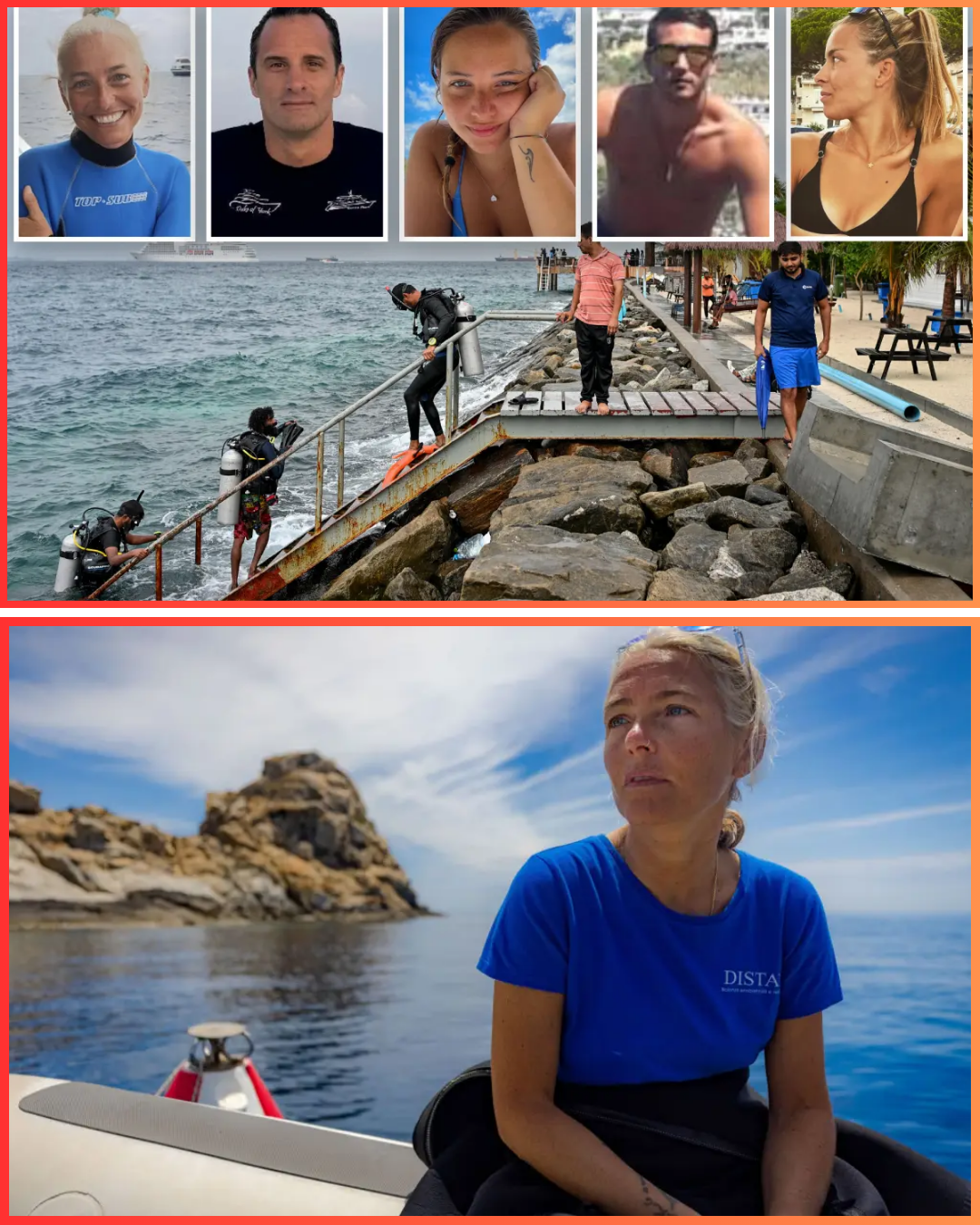
In a devastating incident that has shaken the global diving and marine science communities, five Italian divers, including renowned marine biologist and University of Genoa associate professor Monica Montefalcone and her daughter Giorgia Sommacal, lost their lives during a cave dive in the Maldives on May 14, 2026. The tragedy unfolded in a underwater cave system in Vaavu Atoll, near Alimathaa island, at depths reported around 50-55 meters (approximately 160-180 feet), with the cave extending much deeper. What was intended as an adventurous exploration or personal dive has become one of the deadliest single diving accidents in Maldivian history.
Carlo Sommacal, Monica’s husband and Giorgia’s father, a retired scientist, has been vocal in his grief and disbelief. In interviews with Italian media like La Repubblica, he repeatedly emphasizes his wife’s exceptional skill and caution: “The only certainty I have is that my wife is among the best divers on the face of the earth. And that she’s always been conscientious. She would never have put our daughter’s life or that of others at risk.” He insists, “Something must have happened down there. Maybe one went into trouble, maybe the oxygen cylinders, I have no idea.”
This chilling refrain captures the mystery surrounding the event. Initial reports and expert speculation point to possible factors like oxygen toxicity, panic in a confined space, equipment issues, strong currents, or the challenges of cave diving on standard air at such depths. One body, believed to be that of diving instructor Gianluca Benedetti, was recovered with reports of an empty tank, though details remain under investigation and weather has complicated recovery efforts. A search-team diver also tragically died from suspected decompression illness.
Who Was Monica Montefalcone?
Monica Montefalcone, 51 or 52 at the time of her death (reports vary slightly on exact age), was a leading figure in marine ecology. Born on December 27, 1974, she earned a PhD in Marine Science from the University of Genoa, with a dissertation focused on cartography and ecological indices for Posidonia oceanica seagrass meadows in the Ligurian Sea. She rose to become an associate professor of ecology (BIO/07) at DiSTAV (Department of Earth, Environment and Life Sciences), coordinating the Marine Landscape Ecology Laboratory.
Her research centered on coastal marine ecology, benthic habitats, coralligenous assemblages, marine caves, seagrass meadows, and the impacts of climate change, including marine heatwaves and habitat loss. She was a foremost expert on Mediterranean Posidonia oceanica, advocating not just for protection but active restoration—replanting seagrass to combat losses that have devastated over half of these vital ecosystems in some areas. Her work bridged science, policy, and conservation, contributing to projects across Italy (Liguria to Apulia) and internationally, including in the Maldives where she had conducted research on corals and hydrozoans.
Beyond academia, Montefalcone was a TV personality in Italy, making complex marine issues accessible to the public. Colleagues remember her as a demanding yet generous mentor, passionate field scientist, and advocate for young researchers facing career instability. She survived a 2004 tsunami while diving off Kenya, an experience that underscored her resilience and love for the sea. Her last known message, sent hours before the dive, reflected her lifelong commitment: urging deeper study of the underwater environment “with our own eyes or through the lens of a robot.”
Her daughter, Giorgia Sommacal (around 20-23 years old), was a biomedical engineering student at the same university, following in her mother’s footsteps with a passion for science. The other victims included research fellow Muriel Oddenino, recent marine biology graduate and diving instructor Federico Gualtieri (who had worked under Montefalcone on coral theses), and Gianluca Benedetti, a Padua-born diving instructor and operations manager for the liveaboard Duke of York. Four were linked to the University of Genoa; the dive itself was not an official university scientific mission.
The Dive and the Tragedy
The group was aboard the Duke of York liveaboard, which caters to technical and recreational divers. They entered the water in the morning at Devana Kandu channel in Vaavu Atoll, a site known for strong currents and a cave system with chambers extending to significant depths—entrance around 55m, potentially forking deeper to 100m or more. A yellow weather warning was in effect, with rough seas. Alarm was raised around 1:45 PM when they failed to resurface.
Cave diving at these depths is highly technical, often requiring specialized training (e.g., full cave certification, trimix gases instead of standard air to mitigate nitrogen narcosis and oxygen toxicity), proper equipment, and gas management. Experts like Maldives instructor Shaff Naeem have noted it is “not a dive to be done on normal air or without experience in technical diving or cave training.” Speculation includes possible tank malfunctions, panic, or rapid gas consumption in the confined, dark environment. A sixth diver, a female University of Genoa student, reportedly opted out at the last minute and is assisting the investigation.
Maldivian authorities, including the Coast Guard, led recovery efforts hampered by weather. The Duke of York’s license has been suspended indefinitely. Italy has opened its own investigation, with the Foreign Ministry and embassy involved. As of mid-May 2026, not all bodies had been recovered, adding to families’ anguish.
Carlo Sommacal’s Grief and Questions
Sommacal’s public statements reveal a man grappling with unimaginable loss. His last message to Monica was a light-hearted WhatsApp about their cats being fine. He met his wife in Milan; they moved to Genoa because “she loved the sea.” Now, he must stay strong for their son Matthew, still in high school. He defends the group’s experience and protocols, rejecting recklessness, and awaits answers—possibly from a GoPro camera his wife was wearing.
His focus on the “empty oxygen tank” and “something happened down there” echoes broader concerns in the diving community about equipment reliability, depth limits (Maldives recreational limit is often cited at 30m), and the risks of pushing boundaries even for experts.
Broader Implications
This tragedy highlights the inherent risks of technical diving, even for highly experienced professionals. Seagrass and marine cave ecosystems, which Montefalcone studied, are fragile sentinels of ocean health amid climate change. Her death underscores the personal stakes scientists take in exploring these environments.
Tributes pour in from WWF, colleagues, students, and organizations like Project Seagrass, praising her contributions to habitat mapping, restoration, and public awareness. The University of Genoa expressed deep sympathy. Her legacy lives in the laboratory she built, the meadows she helped restore, and the researchers she inspired.
As investigations continue—focusing on equipment, dive planning, environmental conditions, and possible human factors—the diving world mourns. Carlo Sommacal’s words resonate: something unexpected happened in those silent chambers. The sea that Monica Montefalcone loved and dedicated her life to claimed her and her daughter in a moment that defies easy explanation.
This incident serves as a somber reminder of nature’s power and the need for rigorous safety in underwater exploration. For the families, answers may bring some closure, but the loss remains profound. Monica’s passion for the ocean endures—as does the call to protect it.
Để lại một bình luận