Kim Jong Un just pulled the plug on Putin’s weapons pipeline—and it all started over a single diplomatic move nobody saw coming 😳🔥
While Moscow was trying to play both sides on the Korean Peninsula, Pyongyang reportedly slammed the brakes on ballistic missiles, artillery shells, military transport flights, and a massive troop surge right when Russia needed them most.
Was Putin caught trying to cut a secret deal behind North Korea’s back? Why did a two-month-old diplomatic remark suddenly blow up an alliance that looked unbreakable? And with a Russian delegation just touching down in Pyongyang, is Putin groveling for a lifeline—or setting a trap? 👀
The full breakdown of the betrayal, the secret POW twist that lit the fuse, and what happens next is wild 👇
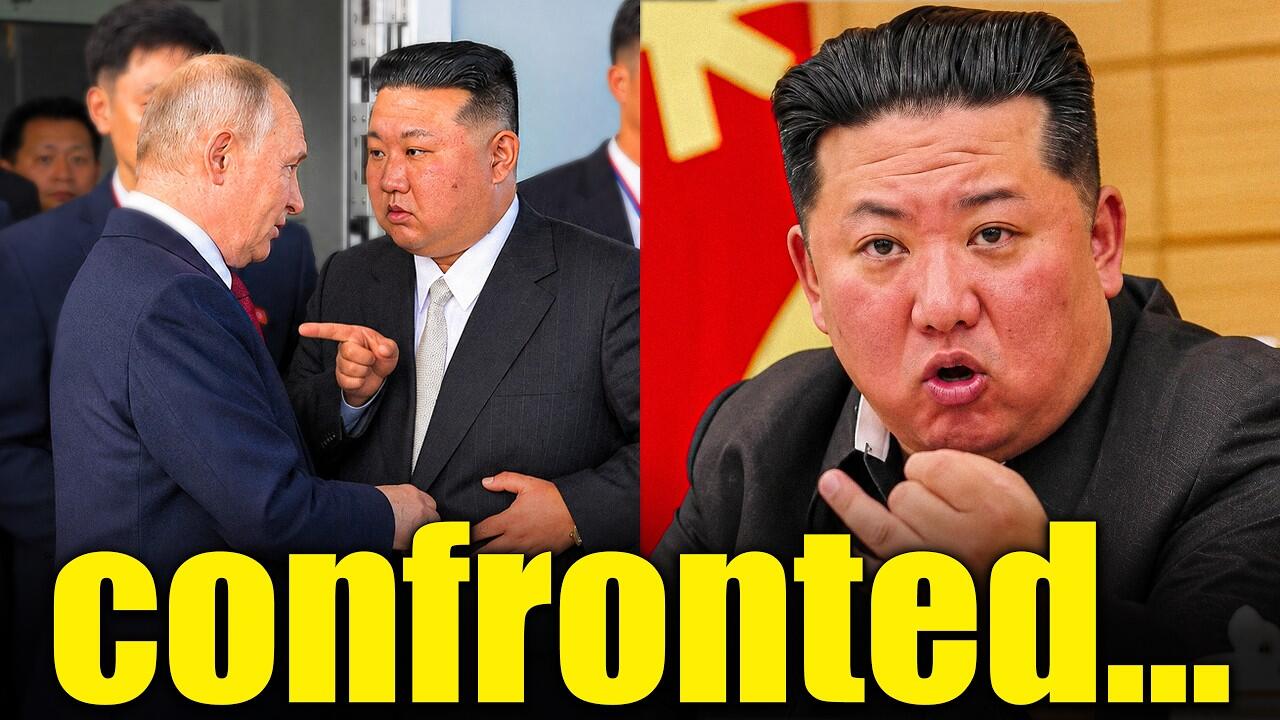
partnership into turmoil just as Moscow’s forces face mounting pressure on multiple fronts.
For more than two years, the alliance between Russian President Vladimir Putin and North Korean leader Kim Jong Un looked like one of the most consequential—and durable—military lifelines in modern geopolitical warfare. Following their June 2024 comprehensive strategic partnership treaty, Pyongyang became a vital supplier of artillery ammunition, ballistic missiles, and deployed personnel to support Russia’s war against Ukraine.
Now, however, a sharp diplomatic dispute has reportedly prompted Kim Jong Un to personally order a temporary halt to key elements of North Korea’s military support for Moscow, according to claims made on November 26, 2026, by Ukraine’s Defense Intelligence Directorate (HUR). At the center of the friction are remarks made in October by Russian Deputy Foreign Minister Andrey Rudenko regarding potential normalization of ties with South Korea—a move that appears to have struck a raw nerve in Pyongyang just as a Russian delegation arrived in the North Korean capital for trade and economic talks.
While independent verification of the alleged military freeze remains limited and Moscow and Pyongyang continue to project public warmth in economic and cultural venues, the reports have set off fierce debate across military analysts, diplomatic watchers, and online communities.
The Spark: Rudenko’s Remarks and a Diplomatic Blowback
According to HUR’s November 26 statement, tensions between Moscow and Pyongyang began escalating in October after Rudenko stated on October 20 that Russia would welcome practical steps by South Korea toward normalizing bilateral relations, including discussions surrounding direct flights.
In geopolitical terms, Moscow’s outreach looked like a calculated attempt to keep diplomatic options open with Seoul, particularly after South Korea’s political landscape shifted in 2025 with the election of President Lee Jae-myung, whose foreign policy posture differed from his conservative predecessor. From the Kremlin’s perspective, maintaining a channel to Seoul offered potential diplomatic and economic leverage—including trade and refined fuel dynamics—while avoiding pushing South Korea further into direct lethal arms transfers to Ukraine.
Yet in Pyongyang, that balancing act was reportedly viewed very differently. Ukrainian intelligence claimed that North Korean Foreign Minister Choe Son Hui pushed back in late October, arguing that Rudenko’s comments ran counter to the spirit of the Moscow-Pyongyang alliance treaty and demanding clarification of Russia’s stance toward South Korea.
HUR alleged that on Kim Jong Un’s personal orders, North Korea temporarily suspended shipments of KN-23 ballistic missiles and artillery shells, barred Russian military transport aircraft from North Korean airspace, and stalled discussions over expanding North Korean troop deployments in Russia from roughly 8,000 to 8,500 personnel up to as many as 50,000. Ukrainian intelligence further suggested that Seoul had sought Russian backchannel communication with Pyongyang—a claim that remains unverified independently and carries the caveats inherent to wartime intelligence reporting.
Why Inter-Korean Politics Make This Personal for Kim
To understand why a diplomatic signal toward Seoul could provoke such a fierce reaction in Pyongyang, analysts point to the sweeping shift in North Korea’s state doctrine over the past two years.
Historically, both Koreas framed their long-term political rhetoric around eventual reunification of the peninsula. In 2024, however, Kim Jong Un broke sharply with decades of family precedent by abandoning peaceful reunification as a policy goal, branding South Korea a “hostile state” and taking aggressive physical and rhetorical steps to sever inter-Korean ties, including destroying symbolic infrastructure and rail links.
That hardline pivot coincided closely with the June 2024 strategic partnership treaty between Moscow and Pyongyang, which included a mutual defense clause committing both sides to provide military assistance in the event of an armed attack. For Kim, locking in a formal security pact with a nuclear-armed permanent member of the U.N. Security Council provided strategic backing in East Asia and a counterweight to U.S. and South Korean pressure.
Against that backdrop, any hint that Moscow might act as an intermediary with—or warm up to—Seoul cuts against Pyongyang’s narrative of absolute solidarity against a designated adversary. Even if Russia views diplomatic flexibility as pragmatic statecraft, North Korea’s leadership has long treated perceived concessions or side-deals involving South Korea as a direct threat to its diplomatic leverage.
A Wider Web of Strain Around the Kremlin
The reported friction with Pyongyang comes at a moment when observers are scrutinizing cracks and strain across several of Moscow’s other key relationships and military fronts.
In the South Caucasus, tensions between Yerevan and Moscow have remained visibly strained following Armenia’s frustration over Russian security commitments during past clashes with Azerbaijan. Armenian Prime Minister Nikol Pashinyan has signaled plans for Armenia to take full control of its state borders over time as Russian border guards’ presence has gradually shrunk since 2024, even ahead of planned diplomatic engagements with Moscow.
Meanwhile, Belarusian President Alexander Lukashenko drew widespread attention in late November in an interview with the French publication Le Point, pushing back on historical justifications for territorial claims and arguing—using a sharp historical analogy—that if ancient borders or past rulers were the standard, all of Russia could be traced back to Mongol-Tatar rule. Lukashenko also sought to distance Belarus from responsibility for the launch of Russia’s 2022 invasion of Ukraine, even as satellite imagery and battlefield history documented Russian forces staging through Belarusian territory. Analysts note that Lukashenko frequently walks a tightrope—projecting loyalty to Moscow while reminding the Kremlin that Minsk retains its own political calculations and sovereignty concerns.
At the same time, military and domestic pressures inside Russia remain intense. In late November, Moscow’s 235th Garrison Military Court ordered pretrial detention for Colonel General Yuri Grekhov, deputy commander-in-chief of the Russian Aerospace Forces for armaments, on charges of large-scale bribery—a charge he denies, and which Kremlin spokesman Dmitry Peskov said he had no information on. While investigators have not publicly tied Grekhov’s arrest to specific battlefield setbacks, military observers have watched a string of high-profile detentions and prosecutions inside Russia’s defense establishment amid ongoing drone and missile strikes against energy and logistics targets.
On the technological front, Ukraine’s defense sector has also drawn headlines with reports of combat testing for domestically developed laser air defense systems, including the Blysk system backed by the Brave1 defense cluster, credited with downing a jet-powered Geran drone. Defense analysts caution that low-power laser systems face real-world limits—such as weather, cloud cover, and short engagement windows against fast targets—meaning they serve as a specialized complement within layered air defense rather than a silver bullet.
Economics and Diplomacy Keep Talking Even as Rumors Swirl
Even as reports of a military pause dominated headlines, bilateral activity between Russia and North Korea did not grind to a complete halt in public view.
Just days after HUR’s report, a Russian government delegation led by Natural Resources and Environment Minister Alexander Kozlov—comprising more than 100 officials and experts—met in Pyongyang for the 13th session of the intergovernmental commission on trade, economic, scientific, and technical cooperation. North Korean state media (KCNA) reported that Kim Jong Un met with Kozlov, attended a performance by visiting Russian artists alongside First Lady Ri Sol-ju, and praised expanding cooperation across non-military areas such as trade, economy, agriculture, power, science, and culture.
That contrast—publicly upbeat economic and cultural diplomacy paired with intelligence claims of a pause in lethal military transfers—highlights how opaque and transactional the Moscow-Pyongyang relationship remains. South Korean officials have reiterated that any illicit military cooperation violating U.N. Security Council resolutions must end immediately, while noting that the full scope of ongoing transfers and potential pauses is closely monitored.
What the Community Is Saying: Reddit, X, and Defense Forums
Across social platforms and military discussion boards, the news of a possible North Korean weapons freeze has sparked lively, sharply divided reactions.
On Reddit communities such as r/europe and r/korea, users quickly debated whether the reported pause reflects genuine strategic leverage by Pyongyang or a temporary bargaining tactic. Some commenters argued that North Korea may be recalibrating after absorbing heavy losses among deployed troops or seeking better terms from Moscow—whether in hard currency, energy, food, or advanced technology. Others pushed back against overinterpreting intelligence leaks, pointing out that North Korea and Russia have strong incentives to keep weapons logistics quiet and that economic meetings in Pyongyang show the partnership is adapting rather than collapsing.
In r/korea, discussions also focused heavily on South Korea’s diplomatic calculus. Some users contended that keeping channels open with major powers helps Seoul manage regional risks on the peninsula and avoid escalatory spirals, while critics worried about reputational and strategic fallout with Western partners if Moscow tries to use Seoul as a diplomatic wedge.
On X (formerly Twitter), Telegram channels, and defense forums, commentators traded theories on everything from drone warfare and laser air defense math to elite infighting in Moscow. Defense-focused accounts stressed separating confirmed court filings and official statements—such as Grekhov’s pretrial detention or the intergovernmental protocol signed in Pyongyang—from unverified battlefield or backchannel claims.
What Happens Next?
Looking ahead, the trajectory of Russia-North Korea ties will likely depend on how both leaders weigh immediate battlefield needs against long-term strategic autonomy.
If North Korea has indeed paused ballistic missile or artillery shipments, Moscow would feel the pinch in sustained firepower and logistics, potentially forcing Russia to rely more heavily on domestic production, alternative suppliers, or diplomatic concessions to bring Pyongyang back to full speed. Conversely, if the pause is a short-term pressure play meant to extract assurances from the Kremlin regarding South Korea—or to drive a harder bargain on economic and technological transfers—a compromise could emerge behind closed doors without fanfare.
For Kim Jong Un, the episode underscores a core rule of North Korean statecraft: even when Pyongyang needs a powerful patron, it rarely surrenders its leverage for free. And for Vladimir Putin, managing allies with competing agendas—while contending with sanctions, economic strain, and a grinding war—remains one of the toughest balancing acts of the conflict.
Để lại một bình luận