🚨 “I ONLY HAD THREE BEERS” — THEN THE BLOOD TEST CAME BACK AT 0.16.
For weeks, that was Stephen Schneider’s account of the night his two grandchildren died in a Barnegat Bay boat crash. Then investigators revealed a blood-alcohol reading twice New Jersey’s legal limit — turning one family tragedy into a courtroom battle over what really happened that night. 👀
Now the defense is challenging the evidence, the channel marker and the circumstances of the crash… while prosecutors point to one devastating number.
The timeline behind the 0.16 BAC — and what happens next — is raising serious questions. 👇
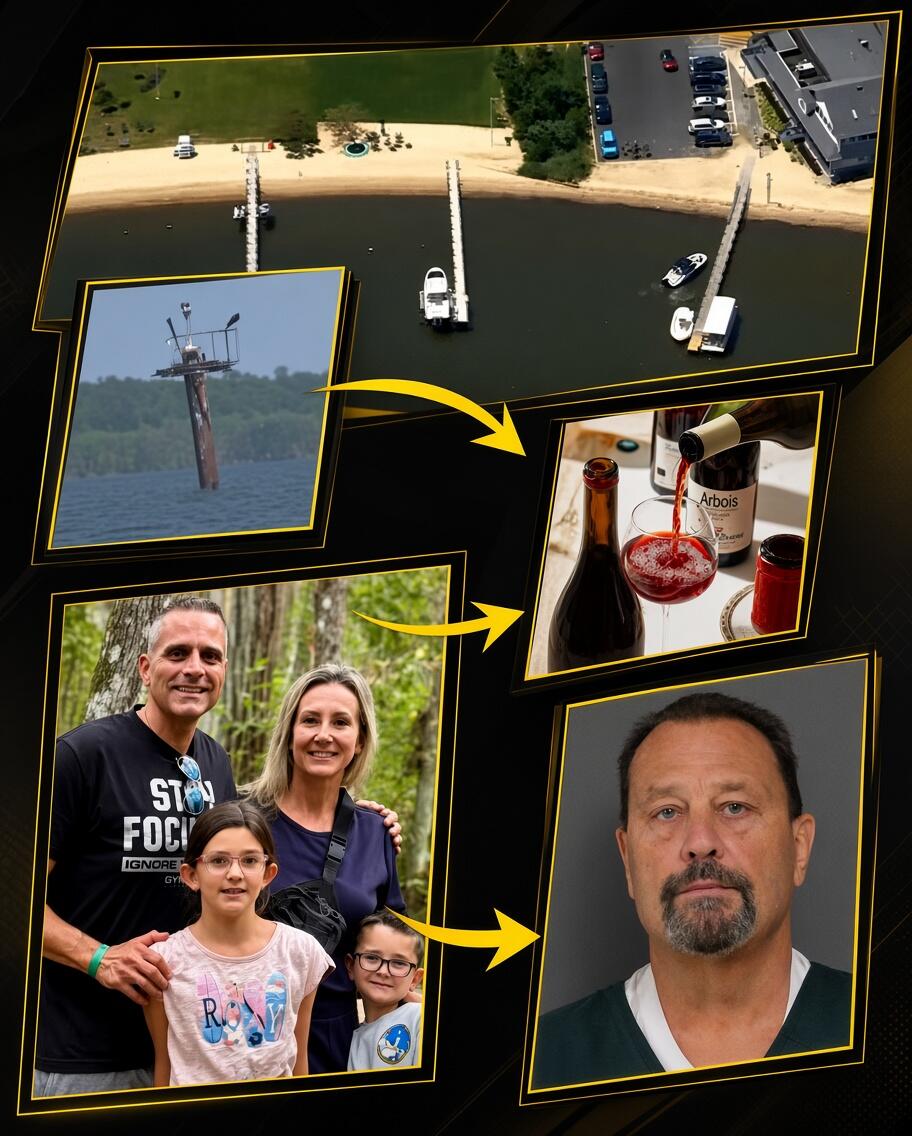
Stephen Schneider’s account of the night began with a seemingly simple statement: he had consumed three beers over roughly two hours before taking the wheel of his boat.
Then came the blood test.
Prosecutors say the 64-year-old New Jersey grandfather’s blood-alcohol concentration was approximately 0.16, twice New Jersey’s 0.08 legal limit for operating a vessel. The revelation emerged publicly during a detention hearing after Schneider was arrested in connection with a July boat crash that killed his two grandchildren, 9-year-old Mya Golabek and 7-year-old Sigmund “Siggy” Golabek.
The figure has become one of the most consequential pieces of evidence in a case that began as a family outing on Barnegat Bay and ended with two children being thrown into the water.
But the case is not as simple as a number on a toxicology report.
Schneider’s defense is challenging aspects of the prosecution’s account, including the circumstances surrounding the channel marker struck by the boat and the reliability of the BAC evidence. His attorney has indicated that an independent expert may be retained to examine the alcohol reading.
And despite the 0.16 figure, Schneider remains presumed innocent unless proven guilty in court.
A family dinner turns into tragedy
The crash occurred shortly after 9 p.m. on July 19, according to court records and news reports.
Schneider, of Bayville in Ocean County, had been attending a family dinner at MJ’s Restaurant & Bar with his wife, his grandchildren and their parents.
The children later chose to return with their grandparents by boat rather than with their parents.
Schneider was operating a Tidewater Custom 280 center-console boat when it struck an Intracoastal Waterway channel marker in Barnegat Bay. Mya and Sigmund were seated toward the front of the vessel and were wearing life jackets. The impact threw both children into the water.
Schneider and his wife entered the water and helped recover the children.
Emergency responders arrived after a 911 call, and the children were taken to Community Medical Center in Toms River. Both were pronounced dead.
The tragedy immediately raised questions about how the collision happened.
Schneider reportedly told investigators that he had been traveling at approximately 20 mph and saw the channel marker only at the last second.
The marker itself has become an important issue in the defense.
“I only had three beers”
According to court documents cited by ABC’s Philadelphia affiliate, Schneider told investigators that he consumed three beers over approximately two hours before the crash.
That account included two Guinness beers and one Miller Lite, according to reports describing the investigative record.
The statement became particularly significant after toxicology results were disclosed.
At Schneider’s Aug. 19 detention hearing, prosecutors said his BAC was approximately 0.16.
That is twice New Jersey’s legal limit of 0.08 for operating a vessel. NBC Philadelphia reported that prosecutors characterized the BAC as evidence that Schneider was boating while significantly impaired.
The contrast between the two pieces of information has become the central factual tension in the case:
Three beers, according to Schneider — versus a 0.16 BAC, according to prosecutors.
But that discrepancy does not, by itself, establish exactly how much Schneider drank.
Alcohol absorption and elimination can vary depending on factors including timing, body composition, food consumption and other circumstances. The significance of a particular BAC reading also depends on when the sample was taken relative to the crash.
Those questions are likely to become important if the case proceeds toward trial.
The midnight blood draw
According to reports based on the case file, investigators obtained a warrant during the early morning hours following the crash to obtain Schneider’s blood.
The sample was reportedly drawn around 12:46 a.m., several hours after the collision.
The test eventually became one of the most important pieces of evidence disclosed publicly in the case.
The timing matters.
A BAC measurement taken hours after a crash is not necessarily identical to the person’s BAC at the precise moment of the collision. Prosecutors and defense attorneys can therefore disagree about what the laboratory number demonstrates about the driver’s condition at the time of the accident.
The prosecution, however, has emphasized the combination of the BAC reading and what investigators say were signs of impairment.
At the Aug. 19 hearing, prosecutors argued that the 0.16 level demonstrated the degree of impairment under which Schneider allegedly chose to operate the vessel.
The defense has signaled that it intends to scrutinize that evidence rather than simply accept the prosecution’s interpretation.
What investigators say happened
The prosecution’s case centers on a straightforward sequence.
Schneider had been drinking.
He then operated a boat at night.
The boat struck a channel marker.
His two grandchildren were thrown into the water and died.
And prosecutors say the blood test showed a BAC approximately twice the legal limit.
Schneider now faces two counts of second-degree reckless vessel homicide, along with charges related to operating a vessel under the influence and reckless operation.
The charges themselves are allegations, not convictions.
The state still has to prove the elements of the offenses in court.
And the defense has already identified areas it believes deserve further scrutiny.
The channel marker question
One of those issues involves the navigational marker Schneider’s boat struck.
Early reports based on court documents said Schneider told investigators he saw the marker only at the last second.
The defense has indicated it intends to investigate whether the marker was properly illuminated at the time of the collision.
That could become an important issue because the circumstances of the collision are separate from the question of Schneider’s alcohol level.
Even if the prosecution establishes impairment, the defense could still challenge whether the state has adequately established how the collision occurred and whether other factors contributed.
ABC’s reporting, however, noted that police said the channel-marker lights were functioning properly.
That creates another factual dispute that may ultimately have to be resolved through evidence rather than competing public statements.
The family reaction is unusually complicated
Perhaps the most striking development at the detention hearing was not the BAC number itself.
It was the position taken by the children’s parents.
Mya and Siggy’s parents submitted letters supporting Schneider’s release from jail.
According to reporting on the hearing, the children’s father described Schneider as a loving grandfather and asked the court to release him.
The defense used that support as an argument that Schneider was not a danger to the community and that the family itself wanted him home while the case proceeded.
Prosecutors took a different view.
They emphasized the seriousness of the charges and the alleged 0.16 BAC.
Judge Wendel Daniels ultimately ordered Schneider released under conditions, including restrictions on his ability to operate a boat or motor vehicle while he undergoes a court-ordered assessment.
His next court appearance is scheduled for Sept. 15.
Why the 0.16 number matters
The BAC figure is important for more than its comparison with the legal limit.
According to prosecutors, the toxicology evidence also indicated substantial impairment in areas such as alertness, judgment, reaction time and coordination. That evidence could become central to the state’s effort to prove that Schneider’s conduct was reckless.
The defense, meanwhile, has another obvious question to answer:
If Schneider really consumed only three beers over two hours, how should the 0.16 result be interpreted?
That does not necessarily mean the laboratory result is wrong.
Nor does the result necessarily prove that Schneider deliberately lied.
There are scientific and timing questions that can be examined by experts, particularly concerning the interval between alcohol consumption, the collision and the blood draw.
The defense has indicated it wants an independent review of the BAC evidence.
That could make toxicology one of the major battlegrounds of the case.
A tragedy that has already changed two families forever
Behind the legal arguments is a family tragedy that cannot be undone.
Mya was 9.
Sigmund was 7.
Both were wearing life jackets when the boat hit the marker, but both were thrown into the water and later died despite rescue efforts.
The fact that their own parents have asked for their grandfather’s release adds an unusually personal dimension to the criminal proceedings.
For prosecutors, the case is about accountability and the alleged decision to operate a boat while impaired.
For the family, it is also about grieving two children while navigating an accusation against a man who was their grandfather.
Those interests do not necessarily have to align.
The court, however, will ultimately have to decide the criminal case based on evidence and the applicable law.
What happens next?
Schneider was released pending trial following the Aug. 19 hearing.
The defense is expected to investigate the BAC evidence and the circumstances surrounding the channel marker. Prosecutors will continue building a case around the toxicology results, the crash reconstruction and witness accounts.
The next major court date is Sept. 15.
The “three beers” statement is likely to remain a major talking point.
So will the 0.16 BAC.
But neither phrase, standing alone, tells the entire story.
A blood-alcohol result is evidence. A defendant’s statement is evidence. The position of a channel marker, the speed of a vessel, visibility, witness testimony and the precise timing of the blood draw are all evidence.
The court will ultimately have to determine how those pieces fit together.
For now, the most striking fact is the enormous gap between the grandfather’s reported drinking and the BAC prosecutors say was measured after the crash.
That gap has transformed the case from a devastating boating accident into a serious criminal proceeding — one in which two young lives were lost, a grandfather faces potentially decades behind bars, and the meaning of one laboratory number could become a central question at trial.
The case is scheduled to return to court in September, where the battle over what happened on Barnegat Bay is likely to continue.
Để lại một bình luận