🚨 AN 18-YEAR-OLD VANISHES ON A MISSISSIPPI ISLAND — AND NOW HIS AUTOPSY CAN’T EXPLAIN HOW HE DIED.
Nolan Wells’ family says too many questions remain unanswered: Why did he stay behind? Why was his phone found without him? And why couldn’t an independent pathologist determine whether his death was accidental — or something more? 👀
Now Ben Crump, the NAACP and Nolan’s family are demanding answers as the case heads toward a grand jury.
The timeline, the phone, the autopsy — and the questions authorities still haven’t answered. 👇
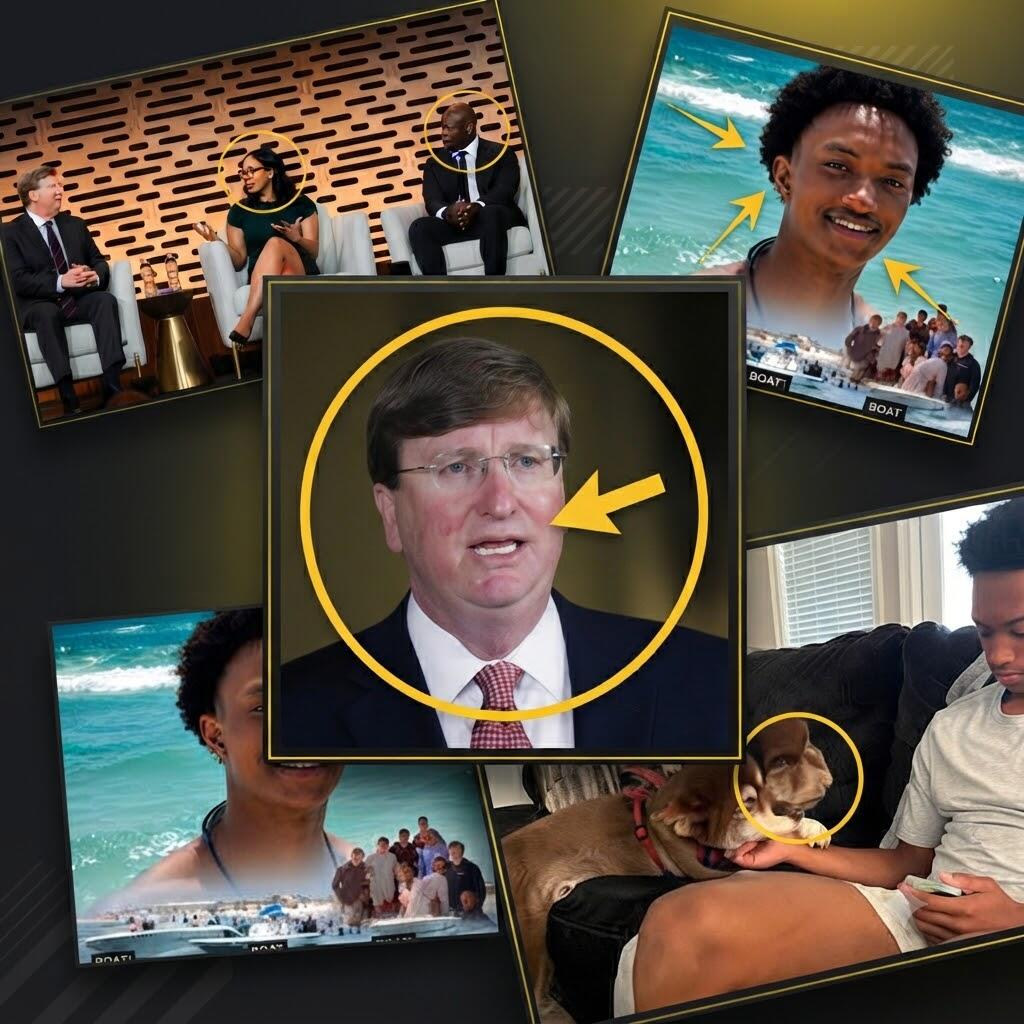
What began as the disappearance of an 18-year-old college football player during a Fourth of July outing has developed into a high-profile dispute over transparency, evidence and what exactly happened to him on a remote Mississippi barrier island.
Nolan Xavier Wells was found dead in the water near Horn Island on July 6, two days after he traveled there by boat with friends to celebrate Independence Day.
More than seven weeks later, major questions remain unanswered.
Wells’ family has hired civil-rights attorney Ben Crump and has repeatedly called for a deeper investigation. The NAACP has since joined the family’s effort. Meanwhile, Mississippi authorities maintain that the investigation remains active and have said the case is expected to go before a grand jury.
An independent autopsy commissioned by Wells’ family did not resolve the central mystery. The pathologist listed both the cause and manner of death as undetermined pending further investigation and said foul play could not be ruled out.
That finding has become a flashpoint in a case already attracting national attention.
A Fourth of July trip that ended in tragedy
Wells, a Black 18-year-old and rising sophomore football player at Southwest Mississippi Community College, traveled to Horn Island with a group of friends on July 4.
According to the Jackson County Sheriff’s Department and the family’s legal team, Wells was last seen on the island that afternoon. His friends eventually returned to the mainland without him.
His mother reported him missing that night.
A search involving local, state and federal agencies followed. On the morning of July 6, a National Park Service ranger found Wells’ body in the water near the northwestern end of Horn Island. His family later confirmed his death.
The initial explanation from authorities focused heavily on the possibility of drowning.
Jackson County Sheriff John Ledbetter told ABC News that he suspected Wells drowned, although the investigation remained open.
That early assessment has become one of the points of contention between the family and investigators.
The family has not accepted the idea that an accidental drowning should simply be presumed.
Why the timeline has raised questions
According to accounts given to investigators, Wells’ friends said he chose to remain on Horn Island after the group was preparing to leave because he wanted to speak with a woman he had met at the party.
The friends reportedly returned without him.
But Wells’ family has questioned that explanation, particularly because he apparently did not have his phone and keys with him when his body was found.
That detail has become a major focus of public discussion.
The question is straightforward: If Wells voluntarily planned to stay behind, why would he leave essential belongings behind as well?
It is an obvious question — but it is not, by itself, evidence of homicide.
The distinction matters because the case has generated a substantial amount of online speculation, with some social-media users constructing increasingly elaborate theories around the timeline.
The available evidence has not established any particular alternative scenario.
The phone has become another battleground
Wells’ cellphone has emerged as one of the most important pieces of evidence in the dispute.
The family has previously raised concerns about the phone and about messages that were allegedly deleted. Investigators and the family’s attorneys have discussed a joint forensic examination of the device.
In July, representatives for the family and the Jackson County District Attorney’s Office agreed in principle to a jointly coordinated forensic examination involving the Digital Forensics Lab at Mississippi Gulf Coast Community College, with possible FBI participation.
But by August, Crump’s team was publicly pressing for that examination to take place.
On Aug. 17, Crump’s office said the family and its forensic experts were prepared to make Wells’ phone immediately available and asked the district attorney’s office to select a date between Aug. 18 and Aug. 21.
The dispute over the phone has added another layer to the family’s concerns.
On Aug. 14, Crump’s legal team also pushed back against suggestions that the family itself had been uncooperative with investigators, saying Wells’ parents remained willing to facilitate the examination.
For the family, the phone represents more than a piece of technology.
It could potentially help establish Wells’ movements, communications and interactions before he disappeared.
The independent autopsy changed the conversation
Perhaps the most consequential development came July 22, when Crump announced the findings of an independent autopsy commissioned by the family.
The pathologist, Dr. Roger Mitchell Jr., could not determine how Wells died.
The report listed the cause and manner of death as “undetermined pending investigation.” Mitchell also said he could not rule out the possibility that nonaccidental factors contributed to or caused Wells’ death.
But the report was not a finding that Wells had been murdered.
The pathologist described significant limitations caused by decomposition. He was unable to examine certain parts of the body that could have helped determine whether drowning occurred, including portions of the airway and lungs.
He also said he could not examine parts of Wells’ throat retained by the state medical examiner, making it impossible to fully assess whether a neck injury might have contributed to the death.
The report did identify an unusual area of red discoloration involving tissue around the back of Wells’ neck and skull.
Mitchell could not determine what caused the discoloration.
That finding has naturally attracted attention, but again, it does not establish foul play.
Instead, the independent pathologist’s conclusion was essentially that the available evidence was insufficient to determine exactly what happened.
Why the autopsy did not settle the debate
The condition of Wells’ body presented a major forensic obstacle.
His body was recovered two days after he disappeared, and the independent examination occurred several days later. Decomposition can make it difficult to identify certain injuries or distinguish trauma from changes that occur after death.
The Mississippi State Medical Examiner’s Office had completed its own autopsy on July 7.
However, officials have not publicly released the full findings because additional testing, including toxicology, remained pending.
That means the public currently does not have the complete official forensic picture.
The absence of that information has helped fuel speculation.
But it is also important to understand why authorities may withhold evidence in an active investigation.
Jackson County District Attorney Angel Myers McIlrath has said the case is being handled as an active investigation and that evidence will ultimately be presented to a grand jury. Grand-jury proceedings are confidential, in part to protect witnesses and the integrity of the investigation.
Ben Crump and the family’s push for transparency
Crump entered the case shortly after Wells’ death.
From the beginning, he has argued that the family deserves a thorough investigation into how their son died.
In a July statement, Crump called for investigators to put every relevant fact before the grand jury and said the family wanted nothing “held back” or “overlooked.”
The family’s frustration has also centered on communication.
Wells’ parents told theGrio in July that they had gone days without hearing from local investigators.
That lack of information became particularly painful because the family’s own questions were increasing as the investigation continued.
For Wells’ parents, the issue is not simply whether authorities believe their son drowned.
It is whether investigators have sufficiently tested every plausible explanation before reaching a conclusion.
The racial dimension has intensified scrutiny
The case has also taken on a broader civil-rights dimension.
Wells was Black and was reportedly the only Black person in the group of friends who traveled to Horn Island that day. The island itself was crowded with people celebrating the holiday.
That circumstance has contributed to concerns among Wells’ family and civil-rights advocates about whether his death is receiving the level of scrutiny it deserves.
The NAACP has now joined the family’s legal effort, while the Congressional Black Caucus has also called for additional federal attention.
These concerns exist alongside an important counterpoint from Mississippi officials.
Authorities have defended the investigation and rejected suggestions that the case has simply been dismissed as an accident.
Mississippi Gov. Tate Reeves has also defended the investigation while criticizing what he characterized as attempts to politicize the tragedy.
The result is a growing public confrontation in which the two sides appear to be asking different questions.
The family is asking whether investigators have done enough.
Officials are saying the investigation is still underway and that conclusions should wait for the evidence.
Social media has filled the information vacuum
As the official investigation has remained relatively quiet, social media has become a major source of discussion about the case.
Videos, photographs and theories about the Fourth of July gathering have circulated widely.
That has created a familiar problem in modern true-crime cases: when confirmed information is limited, speculation can move faster than evidence.
Some online discussions focus on the friends who returned from Horn Island without Wells. Others focus on the phone, the timeline or the circumstances surrounding his disappearance.
But none of those theories has publicly established that another person caused Wells’ death.
In fact, even the independent autopsy stopped short of such a conclusion.
The strongest factual statement available at this stage is also the simplest:
Investigators have not determined how Nolan Wells died.
Investigators now face a critical next step
The case is expected to go before a grand jury once the investigation is sufficiently complete.
Reuters reported that District Attorney Angel Myers McIlrath confirmed the grand-jury review, while emphasizing that the proceedings would remain confidential.
Meanwhile, the family is continuing its own investigation.
A July legal preservation effort involving Wells’ estate sought to preserve communications, photographs, videos, metadata, location records and other potential evidence. The estate’s attorneys have also issued subpoenas involving technology companies including Facebook, TikTok and Snapchat.
That suggests the dispute is unlikely to disappear anytime soon.
The family is building its own record while waiting for authorities to complete theirs.
What happens next?
Several major pieces of the puzzle remain unresolved.
The official autopsy findings and toxicology results have yet to provide the public with a complete explanation of Wells’ death. The forensic examination of his cellphone remains another potentially significant source of evidence. And the grand jury will eventually review the investigative record.
For now, however, the case sits in an uncomfortable middle ground.
Authorities have not publicly established that Wells was murdered.
The independent pathologist has not established that he drowned.
The family has not accepted an accidental-death explanation.
And the available evidence does not yet provide a definitive answer.
That uncertainty is precisely why the case has generated such intense public interest.
For Wells’ family, the unanswered questions are not an internet mystery or a true-crime puzzle. They are questions about the final hours of an 18-year-old’s life — and about whether the system investigating his death has uncovered everything it can.
Until the official forensic evidence, phone examination and grand-jury process shed more light on the case, the most responsible conclusion remains the same one reached by the independent pathologist:
Nolan Wells’ cause and manner of death remain undetermined.
Để lại một bình luận